Friday, July 1, 2022

CITY, COUNTRY, CITY: Blues Harmonica and Organ Kick Out Hard Bop Jams!

 City, Country, City-- Jason Ricci and Joe Krown
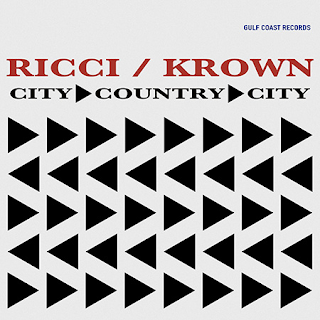
Jason Ricci is easily one of the greatest blues harmonica players in the world, a master of the difficult "overblow" technique that allows this New Orleans-based musician to produce full chromatic scales on a modest folk instrument that's usually limited to the diatonic range. Briefly, through modification of the harmonica reeds and practiced application of novel approaches to em brochure, Ricci transcends the limits of blues structures and improvise with a particular complexity and brilliance and melodic invention that brings his playing closer to a good number of fleet jazz masters from who Ricci takes inspiration. Jason Ricci, make no mistake, is a blues harpist with both feet solidly in the tradition of Sonny Boy, Little Walter, Paul Butterfield, or Blind Owl Wilson (of Canned Heat), a gritty player who makes the harmonica howl, growl, yowl, cry, and moan. There's the sweat and urgency of blues feeling, but one also notices on his frequent extended improvisational extravaganzas a fluidity of ideas, quotes from Coltrane and Django Reinhardt, high-octane bluegrass riffs alternating with Parker-era bebop flourishes, dense chord constructions, rapid fire train patterns. Ricci is a supremely fast player, to be sure, making the diminutive harmonica in his harmonica thunder ahead with the instrumental command of a spotlighted lead guitarist or divinely blessed jazz trumpeter.
Jason Ricci (harmonica), Doug Belote (drums), Joe Krown (organ).

 But like the best musicians noted for technique, speed of ideas and
precision of performance, JR's long improvisations are master classes in solo building; he builds mood with a few notes, a partial duplication of the melody, and then ventures forth, filling out the ideas, playing  on, before and after the beat in playful investigation, surely moving toward a wondrous and prolonged stretch of cadenzas that deconstructs and reassembles the composition at hand. It's the stuff of wonder to behold Ricci start with bluesy aggression before eventually venturing off in various musical side roads to see if he can produce musical moments no one expected. Classical phrases, jazz chromaticism, fleet bluegrass pentatonics, hard power-trio blitzing, softer, lyric acoustic interludes are the elements this player has mastered, and which give his harmonica power. Jason Ricci, incidentally, played on Johnny Winter's Grammy  Award-winning album Stand Back in 2014, was invited by former David Letterman band leader Paul Shaffer to play on "Born In Chicago" for the Rock and Roll Hall of Fame induction of the Paul Butterfield Blues Band in   2015 (broadcast on HBO), and has released twelve albums with several  musical alliances including the scorching New Blood, with singer-songwriter J.J. Appleton, and most recently with the visceral Bad Kind. 

All that said, Jason surprises us again by stepping back momentarily from the manic tones that are his usual fare and brings now the superb City Country City. His partner in this endeavor is organist and fellow New Orleans resident Joe Krown, the sound rear is something of a throwback to an early jazz era of hard-bop, and organ trios, a domain of jazz grooves characterized by a solid rhythm and blues feel, a music grounded in funk. Bolstered by the unfailingly swing and verve of Big Easy drummer Doug Belote, this is a trio well grounded   in all the traditions, have all the right moves and add moves of their own to keep this gumbo percolating, popping and jiving. The title track “City Country City” many will recognize as being the instrumental from the band War for their 1972 The World is a Ghetto disc. The Ricci/Krown reimagining picks up the pace from War’s original, smooth and mellow inspiration. Ricci plays the supple intro figure as Krown supplies gorgeous chords, swells, and swelling tones, and each take steadfast, sharp solo breaks over Belote’s tight, on the note beats. It’s a terrific hook into a session of ancient school playing with a very contemporary edge. Soon enough, Krown and Ricci give themselves license to show their wares in full on the sexy and savvy strut of “Down and Dirty.” Krown takes the first chorus, blending gospel phrases and swift, skidding runs that make you think of Jimmy Smith in his bluest mood. Ricci then takes up the cause after his partner hands it over to him, making his serpentine harmonica work resemble at times other horn instruments; the angelic high notes of a clarinet, the throbbing undulations of a baritone saxophone, the hard and rapid cadenzas of a feverish trumpet player are suggested  Ricci mixes up the ideas, varies his attack, modulates his tone and his pacing as the solo progresses through its conventional blues progression. He keeps it intriguing; he brings you in, he keeps on the hook. The tune rocks like nothing else. From the opening bars, a jaunty theme that could be used as a jazz march, drummer Belote keeps things tight and moving along. The record as a whole is like this, full of Southern fried funk, edgy city blues, jazz fantasias of all sorts. “Jimmy Smith Strut,” “Don’t Badger the Witness,” “Good Clean Funk” are other highlights from this inspired trio. Jason Ricci is very much the best of the best in the blues harmonica world, and this trio collaboration with the estimable Joe Krown and Doug Belote is a grand place to become acquainted with the grace, power, and beauty of this artist’s playing.

Those intrigued about Ricci's other music should additionally seek the 2008's  Rocket # 9, credited to Jason Ricci and New Blood. Anyone with a strong need of hearing some of very fine and blistering blues harmonica work by a player dedicated to extending that small instrument's capacity to surprise a listener, I'd recommend getting the new disc by Jason Ricci and New Blood, Rocket Number 9. Ricci is one of those musicians where you can here the influences of players he's "gone to school" on (sounding to me like a sweet blend of Paul Butterfield, Little Walter, Sugar Blue, Sonny Boy Williamson and Howard Levy , and a smattering of mainstream saxists ala Paul Desmond )who has blended what he's learned into a vigorous, original style. Rocket Number 9 is a glorious and tight blues rock album, with plenty of sharp guitar work, a rhythm section that balances tightness and an appealing , shambling looseness, all of this highlighting Ricci's serpentine harp improvisations and ragged-but-right vocals. What becomes obvious is that young Ricci is not stuck for an idea, and it's a wonder to hear his solos rage and soar and then transform into jazzier lines; one would have a hard time to finding another harmonica player with a better grasp of his technique and imagination or who makes as much of an effort to present fresh notions, configurations, and twists into his playing. There's a naturalness to what he brings forth, a sensual joining of his lines that is remindful of Butterfield at his most prime; rather than seeming like an upstart perfunctorily playing his warm-up licks before launching his super chops too soon and too often, Ricci, like Butterfield, has a jazz-players of dynamics. They're the rare skill of building and releasing tension that keeps on the edge, motivated by the band's virtuoso rhythms and the lead man's sober unpredictability. New Blood, as I said, is a tight, rocking, funkified band.

(This originally appeared in The San Diego Troubadour. Used with permission).



 JUMP CHILDREN --the Scott Silbert Big Band

Little else existing gets the blood pumping faster than the pulverizing rhythm of big band swing. Limbs twitch, hands beat a tempo on table tops, feet tap then turn and then twist in acrobatic dervishing as the ballroom floor fills with the righteous joy of dancers moving to the galvanizing pace of trombones, trumpets, and saxophones galore joined in a righteous 4/4 stride. In its prime in the 30s, 40s and up to the 50s, it was the music supreme. Ellington, Basie, Goodman, Harry James, the Dorsey brothers, and many others filled the ballrooms, the concert halls, and  radio airwaves coast to coast. 

It was rebellion, rhythm, pot, secret hooch in pocket flasks, riffs romance, the music of a Nation on the go on the dance floors, in the factories, on the march in the War to End all Wars as America seduced the world with the sweetest sounds this side of heaven. I'm nearly 70, born too early in 1952 to remember what monumental big deal the big bands were, but decades of speaking to elders kind enough to share their memories and record collections with me, I think it would be safe to assume that collectively those telling me tales of big bands, tour buses, and bandstands thought that this was a glorious thing that would never end. But it did. The eventual ascendancy of Elvis, Chuck Berry and rock and roll in general in the 50s, to make a complicated tale too brief in the telling, was a principal reason the Big Bands were pushed from the center spotlight. Though never completely out of the public mind, jazz in general and big band jazz in particular became marginalized. Efforts over the years to restart interest in the Swing Era brand of brassy sass have mixed results over the years. In a general way and in the interest of keeping this review concise, suffice it to say that college big bands, various sorts of revivalist ensembles and especially that faddish "Swing Revival" of the late eighties-early 90s, to varying degrees, struck me as academic recreations at best, gimmicky opportunism at worst. You couldn't help but wonder if anyone would happen along, unexpected, with a blazing take on this grand tradition, not as an ancient thing that needed to be refurbished or rehabilitated instead as a life force that can make the nervous system jump again in an age where modern music seems determined to deaden our wits.  

Jump Children by the Jeff Silbert Big Band is a choice step in that direction, a session of hard-rocking swing music, fueled by propulsive drums, two fisted piano chords and sharp, superbly textured, rapidly applied horn and reed arrangements. Silbert, a jaunty and fluid tenor saxophonist and arranger and a member of the Smithsonian Jazz Masterworks Orchestra, proceeds here as though Big Bands never went out of style. He's assembled a formidable fourteen-member band, players who lock together in common cause to move the listener through deep, brash colors, and intricate time signatures. There's abundance of ensemble electricity here. Or, more like an embarrassment of hot, very hot jazz.

A bold statement, but the music's galloping swagger is  evidence that enthralls and rattle the senses. The album opener and title track "Jump Children", a tune recorded in 1945 by the International Sweethearts of Rhythm (an all-women and integrated unit that found a measure of international acclaim) is  given a blasting, endearingly fidgety treatment here, with fine solos from trumpeter Josh Kauffman on trumpet and Grant Langford on tenor sax swiftly and lightly darting over and around the cut time horn arrangements, all of which boosts Gretchen Midgely's already animated vocals to heights of finger snapping jive. This collective of virtuosos through a rich swath of known and less known tunes from the period, performed with a superb rhythm section that makes the music move with a youthful flair you might not have expected. There is nothing dated here. There are many sweet spots, but I would point out two especially catchy numbers, the first being an intrepid  iteration of  1939's "In a Persian Market" by Larry Clinton indulges in magnificent stop-time fun after the main theme is stated. Second, the Silbert Big Band's treatment of Mercer Ellington's "Jumpin' Punkin" from 1941 is an elegant jaunt, a spare set of horn charts laced together with sublime statements from multi-reedist on clarinet and Leigh Pilzer on baritone sax. The album concludes on a stratospheric note, the warhorse tune "Stompin at the Savoy" (composed by Chick Webb and  Edgar Samson), the trademarked horn charts soaring over a brutally effective swing section while a round house of soaring and succinct solos from Kauffman (trumpet), Jen Krupa (trombone), Silbert (tenor sax) and Ken Kimrey switch off with the unison horn lines in a melee of musical chatter.


Wednesday, June 1, 2022

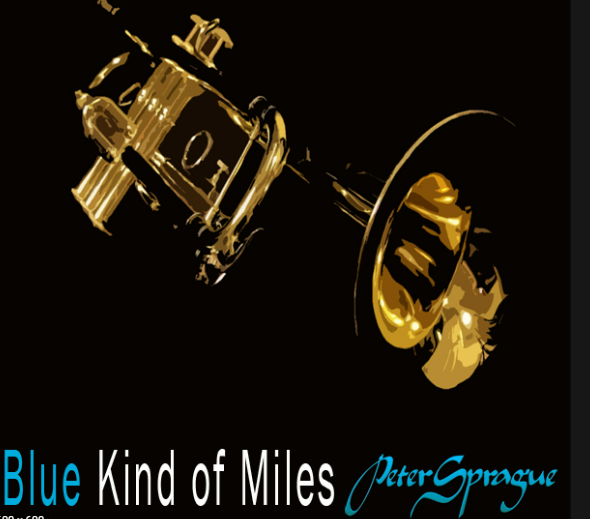
BLUE KIND OF MILES--Peter Sprague


It's an odd situation when there's a jazz artist giving tribute to history's most acclaimed jazz trumpeter who proceeds with a band lacking what you'd assume is the  most essential instrumentalist. Yes, we're speaking of a Miles Davis commemoration that exists and moves forward without a trumpet player in their ranks. Odd yes, but no quandary need apply here. Guitarist Peter Sprague’s recent offering, Blue Kind of Miles, the absence of a trumpeter is strategic artistry. A reinterpretation of Davis’ music from his landmark 1959 album Kind of Blue, Sprague and longtime comrades (brother Tripp Sprague on sax, flute, and piano; Mack Leighton on bass; and Duncan Moore on drums give themselves the luxury to play with Davis’ seminal compositions. Anyone awaiting the chance to distract with useless complaints about how a younger horn player goes about playing the music of someone whose oeuvre many think invaluable can take the day off. Blue Kind of Miles, highlighting Sprague’s delicate arrangements of Davis’ mystical, modal, and near minimalist tone poems, allows the music to breathe with the fresh breath of this quartet’s sublime collective personality. 

Far more than compensating in place of a trumpet is versatile reed man Tripp Sprague as the album’s secondary soloist, and throughout the disc he reveals what he knows about tone, phrasing, and constructing a soulful message. He fills his solo space with a bevy of melodic ideas on the album’s opening number, a high-stepping rendition of the Davis classic “So What.” His sound is warm and full. His relaxed yet agile playing commands close attention. Peter, as always, combines a precise lyricism to his guitar work; his ensemble work approaches a world-beating classicism, but as those who’ve followed his diverse career since he first appeared on the scene with Dance of the Universe in the seventies, there is an innate swing to his playing. Samba to bop to a bluesy funkiness, all embodied in this improviser’s statements. The haunting flamenco inflections of his spotlight section on Davis’ “Blue and Green” moves you in a way usually reserved for the saddest lyric poets. 

“Freddie Freeloader” is a funky conversation among Tripp, Peter, and bassist Leighton—short, bluesy phrases and clipped riffs, something said, a pause, a quizzical response, an emphatic reassertion, another pause, and a musical shrugging of the shoulder. The band then finds the shuffling groove and makes it move steadily with sway and sass, led by Leighton’s fleet bass outing, making the bass run and skip through its walking paces and maintaining the feeling of a rag shop boulevardier seen in all his street corner majesty. Tripp and Peter provide their solos in seamless order; Tripp’s reed work is a moaning blues mosaic of deep-toned exhilaration, laying down a rhythm and blues inflected hard-bop grit he manages with  dexterity and lightness of touch. Peter’s foray into sharp notes, deft runs, and graceful octave work, following the bass line closely, hewing close to the spare theme, but lacing fleet lines at unexpected intervals. The proverbial sound of surprise. “All Blues,” likely the most covered Miles Davis composition, gets a shrewd modification in this outing, with a brisker than usual pace and some additional and tricky changes before the improvisations commence. It is to be expected, I’d say, given the universal familiarity of the original motif. Odd, but most of the versions I’ve come across over the years don’t alter Davis’ spare construction very often. This arrangement provides the atmospherics for a twisting pair of extemporization from the Sprague brothers, followed by a remarkable, rich bowed solo from Leighton. Drummer Moore, a champion on all the tracks as he performs wonderful rhythm section duties with Leighton, cannot be praised enough. Pulse, groove, flawless shifts in tempo, the man behind the traps keeps this session grooving the particularly provocative paths that Miles Davis laid out. Blue Kind of Miles is an intriguing and innovative tribute to the man’s singular vision as an improviser and composer.

Wednesday, April 20, 2022

 Time Piece--Gerry Niewood and Timepiece (Horizon/ A&M)


 Niewood, playing flute and soprano saxophone, leads” his group through a series of songs that is somewhere near the progressive bent of ECM recording artists (Gary Burton, Ralph Towner, Jan Hammer, Keith Jarrett, ) and the modernized concept of mainstream jazz (Hubert Laws. Freddie Hubbard, John Klemmer.) If nothing else, the result is one slick package. Niewood's abilities on flute are passable. His style is lyrical and intelligently thought out and shows more imagination than some better-known players such as Herbie Mann and Tim Wiesberg, but he plays it safe too often, hesitant to expand a solo beyond the predictable. I prefer his soprano sax outings, which number only three here. His tone is looser and more confident and Niewood is more willing to take chances, covering wider spaces, with deft acceleration in his lines when needed. The band, comprised of Rick Laird, bass, Ron Davis, drums, Michel Donato, acoustic bass, and Dave Samuels, Vibes, turn in proficient, workman-like performances. Samuel's work on vibes adds immeasurably, especially on two John Abercrombie compositions. “Ralph's Piano Waltz,” and “Timeless.” If Niewood loosened up, he'd be more interesting. Gerry Niewood and Timepiece suffers from stylistic indecision at worst. At best, it'll make great background music while you’re filling out tax form

s.

Tuesday, April 19, 2022

BEACH BOYS

The Beach Boys still get chided occasionally for not being the most profound members of the rock front-runners who emerged from the Sixties. With Beatles, Rolling Stones and the  Who telling daunting  narratives, engaging in experiments with Eastern philosophies and flirting with the trendy notion that palace revolution was a legitimate means to change the course of societies on an international scale in the proper and preferable direction it needs to go into, the poor Beach Boys were at times castigated for being naive, pathetic, clumsily trying to integrate themselves into the psychedelic trappings of the time and yet stuck, forever, in a fantasy realm of innocent times in a fabled Southern California Eden that no existed (if it ever did). Of course, the saner minds among us realize that Brian Wilson and the Beach Boys weren't obliged by any moral standard or dictate to serve anyone's agenda, vague or specific , for creating a heaven on earth. Their mandate, Wilson's mission, was to service the Muse that visited them. What they did musically for their generation and for history after that was what they needed to do; anything apart from that would have been false, dishonest, discredited and, I think, tossed into the trash can.Many great artists, I'd say, are not deep thinkers, although there are some obvious exceptions. If anyone was looking to Brian Wilson and the Beach Boys for Blakean projections of a harmonized heaven and earth or Dickensian critique of economic disparity, they are both foolish and out of luck. Mood music you might call the music of the Beach Boys, evocations of lithe spirits, joy, sadness, peace, inner struggle, eventual respite, much of which was expressed musically with frequent genius. For me, the lyrics were there as markers of mood, not meaning in particular, agreeable syllables and consonants of particular inclination that existed primarily to allow the Beach Boys to harmonize as amazingly as they did; if their world view was simplistic, banal, locked somehow in more innocent times, that's fine with me. A good amount of great poetry, novels, plays and such are about characters and narrators dealing with memories of times that at least seemed less complex . At their best the Beach Boys' music literally transcended earthly concerns and achieved something greater than most profound literature can hope to accomplish.

Friday, March 25, 2022

BILLY JOEL'S HUMMABLE SMARM

Slate contributing editor Ron Rosenbaum asks rhetorically early in his   hissing 2009 hate – note on Billy Joel about why he should spend a column excoriating the songwriter who's already had his reputation vandalized by critics, snobs and lipless influencers for decades? Well, yes, why another hate jerk off at the expense of the much and justifiably maligned Billy Joel? The author needed something to write about that would less use of brain power and more use   of embedded knee-jerk responses to Billy Joel's name. This wasn't an overview of a bad musician's career; rather, it's an allergic reaction expressing itself with words  instead of hives and welts. Rosenbaum couldn't help himself, Joel is that rash, he was incapable of not scratching.  Truth needs to be told, though. Billy is a bit better than naysayers would have you think. Joel is not the genius he presumably thinks himself to be, but he does merit a measure of defense .  Billy Joel is a mixed blessing. An effective and versatile vocalist, a genuinely gifted writer of not so obvious pop melodies, a frequently maudlin, pretentious lyricist (although he redeems himself when his pop sensibilities rule over his desire to Be Meaningful), a technically proficient pianist, a smarmy ham bone. One may not like him on principle--I don't care for him--but I have to admit he's done some work that merits a second and a third listen. He's a cross between Harry Chapin and Elton John, I guess, with a strong aftertaste of the worst brands of smugness that typifies pop music in general. What sinks Joel is his lack of any ironic sense of himself and the material he writes to address foul matters brewing in the world; despite his working-class roots, the idea of an unfathomably successful pop star sing a catchy--hummable, all so meaningful ballad to the laid off factory workers of “Allentown” informs us that his protest songs are not about the poor nor the destitute, but in making Billy Joel feel good about himself and looking good to the fan base at the same time.Joel's sins of pretentiousness are numerable over a long career , something I noted with his first hit “Piano Man”, a bloated imitation of  Dylan's "Ballad of a Thin Man” , to the point where I stopped paying attention to him altogether with the name-checking orgasm that comprised the hit “We Didn't Start the Fire". The obviousness of his conclusions, the cartoon likenesses of his characters, the clichéd contours of his examples, the barely concealed arrogance of his narrative air are the kind of thing that makes the smart people like you, Rosenbaum and I slap our foreheads and make us desire to grab either a gun or a cold beer. Unlike Rosenbaum, I'm unwilling to muster the indignant heat it takes to do another body slam on Joel's oeuvre . It's a matter that I've done so in print and online repeatedly, and that comes a moment in any writer's career when he or she realizes they're merely rearranging all the old complaints. I'll forgo the oratory and leave my summary judgement on B.J.'s body of work as this, a skilled journeyman with delusions of being something greater. I relate on an emotional level to that status, and I don't think it unlikely that many of us wanted to go beyond our limits and reach for the greatness of giants. The difference , the not-so-sour truth, is that Joel was actually fairly good at putting together a memorable melody and an occasionally astute rhyme. And middle brow as he might be, he got paid handsomely for the effort. 

Thursday, March 3, 2022

ROOTS ROCK, SAN DIEGO STYLE


The Innocent Bystanders are a San Diego-based troupe of roots-rockers who’ve assumed the mantle of being this area’s premier practitioners of a music that is often called Americana. To clarify, Americana is a contemporary musical approach that combines and blends many kinds of American roots-oriented genres. There is a always the threat that unrestrained eclecticism can make a flavorless goulash, but the knowing musicians, those with the fabled “big ears,” able to craft skillfully, the plaintive, the soulful, the swinging, and the rocking from the disparate schools of folk, blues, rock, country, and soul (most definitely soul), speaking to audiences in ways commanding attention. More than that, the best of it supplies the shock of recognition: the insistent blues licks, the ethereal gospel-tinged choruses, the plaintive, scrappy vocals drawing from Appalachian and Memphis influences, which send a shiver down your spine, makes you at various times needing to laugh aloud or shed a tear for no immediate reasons. You have the feeling that you’ve just returned from a long adventure to unknown parts and met a bevy of fascinating Americans in doing so. Then the lights of the living room lights come back on and in the quiet realize you’re transported.

This is the magic that the best of the Innocent Bystanders creates. Comprised of vocalist Deborah Darroch, Jessica LaFave on tenor saxophone and backing vocals, Ben Nieberg overseeing acoustic guitar and vocals, Steve Semeraro on electric guitar, Donny Samporna on bass, and Steve Berenson behind the drum set. The band brings their distinct skills for the marvelously funky and frayed variety that occupies their second, The Book of Life. The tone is gritty and soulful in ways that transcends barriers and speaks plainly on matters of life on life’s terms, death, getting beaten down but getting up again, and putting one’s shoulder to the wheel again. You get this feeling of strength and resilience on the album’s opener, “No Place to Go,” tenderly offered in a Stevie Nicks-ish croon by Darroch, guitars; drums and bass lay a delicate yet sinewy weave of rhythmic momentum as the tale of hard years, travel, an uncertain fate haunting the troubled road unfolds. Darroch’s vocal delivery hasn’t a trace self-regret; this is a person making peace with their regrets and sorrows with the conviction to move onward, forward. A remarkable song about seeking in the midst of desolate circumstances.

The mood kicks up a notch later in the record’s flow, especially with the saxophone oomph of LaFave’s tenor sax goosing the gospel/ soul-train testifying of the suitably chugging “This Train.” Steady as she goes, Nieberg proffers suitable rhythm and blues wailing on his vocal. This train might be the same conveyance that Curtis Mayfield foretold his listeners with the classic “People Get Ready,” an evocation of that same train as it pulls from the station and goes through the quizzical paces of leading a full and useful life. 

The Book of Life covers a broad swath of musical approaches that are lovely to behold in the effortless expressiveness the Innocent Bystanders bring to their well-wrought expanse of American styles. The concluding song, “Lost Things,” evokes Bruce Springsteen and Tom Petty, with a trace of the Arc Angels making this rugged ballad even more alluring than it might have been. Nieberg’s vocal takes on a husky rasp, the band swells and recedes and swells again at points in the narrative for splendid dramatic effect, and you find yourself imagining that there is a man in the center spotlight taking stock of the trajectory of his life and realizes that each trauma, heartache, birth, death, celebration, and catastrophe has all been worth the years of struggle and hard-learned truths. The song seems, to me, to be the point where one’s experience evolves from a sullied timeline of conflicting emotions to becoming wisdom, a living philosophy. The Book of Life is wonderfully unpretentious in the blessedly small-cap wisdom the songs bring us. This is rich, evocative music in a very American grain.

💋💋💋💋💋💋💋💋💋💋💋💋

Originating from Des Moines, IA, San Diego based singer-songwriter-and guitarist Michael J. Dwyer has a voice that has an appealing husky texture, dusty and measured in how it mulls over a lyric and shares it with an audience. He sounds like the better moments of Dylan or Mark Knopfler of Dire Straits, throughout the length of his new release of eight original songs, Borderland 2. As the flinty edge of his voice suggests, the disc is a series of confessions, admissions, declarations, resignations, estimations of life lived long and fully enough that a timeline of hard living, fast loving, revelry, and ruination mark the beginnings of wisdom.

The material here, however, aren’t about ruing a past of blown chances or plans that didn’t pan out; Dwyer speaks additionally speaks from resilience, putting his shoulder to the cracked a wheel again and persevering. Borderland two is less the tales of a survivor, but a man who relishes the life he has yet to lived. This is somebody who isn’t hanging up his guitar or walking stick anytime soon.Borderland 2 is a fascinating evocation of divergent styles, be it folk, country, blues, or rock and roll. In other words, Americana, the alluring synthesis of North American roots music. Electric and acoustic guitars, keyboards, banjo, harmonica, and drums are the essential seasonings here, organic textured, earthy, and homey, creating an evocative intimacy as the stories unfold. One would expect an entire ensemble to provide a musical outlay this rich, but the credit goes to two musicians, Dwyer himself on guitars, harmonica and vocals, and his associate Ronald E. Golner, who handles the other instruments, who also oversaw the recording, mastering, and production of the sessions. (Let’s note that trumpeter Brett Wagoner provides his skills to good measure on the track “Fuego Grande,” a sizzling Spanish-flavored torch song). The sound resonates, punchy, each note and chord landing precisely on target.

Again, the record is not sallow caterwauling of life gone wrong. Dwyer informs us that he’s got a lot of life left and a lot of fight to go with it, amply laid out in the opening track “I’m Not Afraid.” This is the telling of an old timer, declaring himself as a fool who might have dismissed in some instance, that he’s too old to dread what life might bring to him that do, that he’s been alive too long through too many circumstances to care what the world at thinks of how he lives his life. He sounds more than willing to put up his dukes to defend his right to not care what you think. 

 Resilience is a theme that runs through these songs. These are notes from an ongoing journal of a man who arises again and yet again after that, convinced to his core that the shame isn’t in falling down, but in staying down. “There Comes a Time” ends the album with the message to the young, the impatient, the impudent, the cocky, the alienated, the arrogant, the afraid, to anyone convinced that their life is at a hopeless dead end so early in their years to take chances, take risks, be unafraid to make mistakes, to fail, to get up and go again when your face is in the dirt, to complete something, to do many things to ensure that on reflection  that one didn't spend their life weeping. Michael J. Dwyer, a traveler, a songwriter, a man tempered by time and dared to feel his experiences deeply, tells us with Borderland 2 that it’s worth it all, and he’d do it again if he could.

Wednesday, February 23, 2022

GARY BOOKER OF PROCOL HARUM, RIP

 "A White Shade of Pale"  is among the many classic rock tunes who'se virtues and demerits have been a persistent source of ambivalence in my decades of  forming a  hard line on any number of classic rock artists. Concerning AWSOP, it might be enough to say that for all the grandeur of the Bach-like organ that defines the song, the Elizabethan vagueness of the lyrics and the soulful vocal that invested the opaque lyrics with more drama than was warranted, I've grown sick of the tune and hope never to hear it again. The exhaustion has more to do with exasperation since the band that did the song Procol Harum, had quite a catalog of albums containing better, more adventurous songs. Now one of its key members has passed, and a moment to appreciate what he and Procol Harum accomplished is in order.

 
Gary Booker was a fine and expressive singer /keyboardist for a grand British band, Procol Harum. The band was never really a blues band, but the blues were never that far from their original songs, all of which featured lyrics by Keith Reid. Reid was considered a full member of the band since his agile handling effectively sketchy terrains involving of mystery, alienation, resignation, gallows humor and world weariness. His skill at creating odd atmospheres with is stanzas had as much to do with creating the public's perception of the band as their instrumental styling. Robin Trower, another founding member, brought his serpentine and stinging blues influence to the more classical and disparate folk influences that informed the band's catalog of tunes.

Booker, a restrained vocalist who magically combined nearly perfect diction with an effective suggestion of a blues wail boiling under the tonal calm, was fine , even brilliant interpreter of Reid's curt surrealism. This song for consideration here, "Juicy John Pink" from their 1969 album A Salty Dog, is a blues, a straight ahead blues sans classical garnishment, reveals the combination of vocal, lyrics, and guitar that brings us a tale of a soul on his last day on earth entreating the Lord to take him to Heaven rather than the dull agony of Hell. Gary Booker, RIP.

Friday, February 18, 2022

ROBIN TROWER:MUSIC FOR TRICK KNEE


Old guitar riffs do not die as long as I live, as they are the soundtrack of many a routine and daily walk up the stairs to work, treks to the stores, adventures in scattered beach area parking lots, the journey to the forbidden and familiar knowledge behind a girlfriend's front door. Or the entrance to a doctor's office, for that matter. I had often joked  that each of  us requires a “signature riff”,  a power chord mini-anthem  ourselves that with which we have on constant mental standby as we go about our routine tasks and  past times; I often imagine the open  assault of “Mississippi Queen” commanding a room's attention once I enter, if only to perform the mundane obligation of paying a gas bill.The theme song changes, to be sure--there is no channel changing that's faster  or more assured than what goes on the car radio dial of the mind--and there are those days when what I carry in my imagined soundtrack in my imagined movie are the genteel whispers of Paul Simon's three-hankie whining, the grating,  rusted scraping of  early Velvet Underground, the  guitar amnesia of  Larry Cor yell. It varies according to mood and what lies on the to-do list that day. (Not that I actually have a to-do list. 

It's actually what I remember to get around to accomplish, get over with, or finish from an earlier, half-hearted attempt. I am not so organized. I am a fifty-eight-year-old man, almost fifty-nine, who has the personal habits of, say, your average 17-year-old, just in college, in his first off-campus apartment, with a room of his own). That said, the last few days have been one of stupid-making idleness, since I tripped in my apartment earlier in the week and ran my already-game knee into something hard and unforgiving. The last four days have been missed work, icing the swollen knee --no breaks or fractures, thank goodness-- and diving into an old record collection. Some of this stuff does not sound so bad.

Robin Trower, for example; the former Procol Harum guitarist, is very possibly the only Hendrix inspired fret specialist who fully established his own distinct approach to guitar melodrama while still maintaining the ethereal quality of his Mentor's style. Twice Removed from Yesterday, his debut, was a wonderful tone poem start to finish, emphasizing mood and atmospherics, by way of the dreamier parts of Electric Ladyland. His choice of Jim Dewar, ex of Stone the Crows, for a lead vocalist  inspired, a gritty, soulful belter whose lower register gravitas gave the core idyll ism of the lyrics something very solid to wrap around. "I Can't Wait Much Longer" is that rare breed of power ballad that actually manages to make you feel the ache of the heart that hungers for a love that won't reciprocate. 

Bridge of Sighs veers from the mystical tone and lands on a hard rock style, with a solid grounding in r and b grooves: solid riffs and rhythms, charging solos, veryyyyyyyyyyyy fluid guitar work. Where the first album was strong on thick overlays of guitar tones and coloration to produce a spaced-out elegance, Bridge shifts more towards hard rock and rhythm and blues, up-tempo, hooky riffs and blockbuster vocals. Dewar and Trower are as fine match of lead singer and guitar hero as we've seen emerge from the cantankerous era  of Sports Arena rock, as finely twined on production and material on their these two releases as Robert Plant and Jimmy Page were on Led Zeppelin's entire body of work or, more appropriately, as Paul Kossoff, guitar and Paul Rodgers, vocals, were in their seminal blues-rock band Free. The secret might be that the two of them are aware of each other's strengths and weaknesses--they compliment each other with nuance, style, a  bit of emotional reserve that makes the tension of their best songs here--"Day of the Eagle", "The Fool and Me", "Too Rolling Stone"--continually satisfying. Trower is a blues guitarist at heart and knows the value of fluidity and restraint; during his solos,  he continues the vocal line established by Dewar and seems to continue the tale in choice selected notes, not words. Dewar himself is perhaps the best of the British blues vocalist, a rich, grainy baritone with a supremely dark texture.  This band, to be sure, had a penchant for writing the phony-baloney Dungeons and Dragons fantasy lyrics that laid waste to two generations of budding Ira Gershwins, a subject and concomitant imagery wholly unsuitable for the quality of Dewar's voice--imagine  Little Milton singing "In the Court of the Crimson King". In these instances, Dewar sounded silly, blustering, bombastic; this is a lesson that bad songs happen to good singers. Ironically, the supreme example happens with this otherwise fine album's title tune. Overall the swirling guitar melodrama, Dewar intones with his best game face and sounds more like a dog barking at car lights casting across a garage wall rather than a strong bluesman. I vote for the bluesman every time.

Wednesday, February 9, 2022

MUSIC AS FURNITURE


Ted Gioia is a jazz critic , music historian and journalist who's become provocatively concerned with the seeming devolving status of that of his occupation, music criticism.His commentary  caused to choke with the shock of recognition, as it appears that the coverage of music, old and new, fresh , middling and downright putrid, are accorded the same rhetorical standbys when they are covered on arts pages, in print or posted to lifestyle websites. It's been as though that no one among an invisible, snarky and uncommitted ranks of entertainment writers have a passion for music as such; critical estimations in so many record reviews I've come across over the last ten years have skewed toward the lazy reshuffling of conventional wisdom a 60s Old Guard of music judges managed to  render into meaningless pulp by the end of the 70s. Musicians, bands, their music  seem more fetish items, articles of acquisition that would reinforce a sophisticated listener's idea of themselves as Hipsters keeping a faith with some forgotten notion of living by values that transcend the merely material.

 But it is materialism we're addressing here, and music is less, much less the vehicle for any kind of new poetry, the space where what can't be said or explained about an existence whose purpose and meaning behind the flesh and blood circumstances of our routine gets expressed in a manner unforgettable and which provokes more earnest self-examination, and instead makes all the sweet music into tones that compliment the carpets, the view of the ocean from the top of the hill, the selection of unread books on sparsely occupied shelves.  In fact, it's not that music criticism has devolved  down to lifestyle reporting, it is merely being replaced by  editors and publishers by a species of celebrity journalism.  Musicians  replaced Hollywood movie stars in large part as famous and rich folks that fans of popular culture obsess about and, as it goes,  in a world where media is now a  24-hour concern, filling up those column inches online and online and , for the love of god, all over those cable shows, the fastest and most ready  bit of material for reporters to bring to a drooling public's attention are the trivial doings of what these people do in their daily lives. 


In an atmosphere where everything is up-to-the-minute, the second, the nanosecond, music criticism only takes you so far. I was a music editor for several years and I know the dread of having holes in your section layout--that is , no stories, no reviews, no ads to fill up a gaping white space on the page you're trying to ready for publication. As much as I wanted to maintain my integrity and reserve my editorial  copy to matters of considered cultural criticism and the arguing  for the greater good of all, as a practical matter my standards had to be modified when I decided to run a substandard, gossipy,  trivial bit of celebrity worship on my pages. Nature abhors a vacuum,  and so do editors. The Village Voice, Down Beat, Rolling Stone, Filter, Pitch Fork, Jazz Is, all present straightforward criticism of musicians and their work, and the quality varies publication to publication, of course. A basic consideration, though, is that back in the day, when  music, basically rock and roll, was considered a force for change by the media that tried to understand it, we saw a rise in earnest young intellectuals--Paul Williams, Greil Marcus, Robert Christgau, Jon Landau, later Lester Bangs--who took the music seriously and attempted to essay forth the underlying movement of history in the notes played and the rhymes sung. This gave us a particularly potent kind of literary commentary; there was a lot of good writing that came out of that. Moreover, though, much more nonsense written for music criticism, and  it appears that readerships no longer believe that music, as such, represents a Hegelian transformation of History; it meant a good time, period.  The basic message is that cultural commentary of the highest regard will dominate the arts pages of general interest publications, online and off, only when the zeitgeist has us believe that music and art in general have a meaning and direction that is more, much more than the technical achievements . 

I think we need critics, informed , passionate and committed critics, to discuss and eventually provide readers with articulate view of works of fiction, drama, movies, visual arts to give one context, stylistic analysis, author /musician/poet/playwright (etc) theme tics and development there of, and how well the current subject of review stands up , merit-wise, with the best of the artist's body of work so far. This is more academic, I suppose, than merely "reviewing", which tends to be terse consumer guides that opine on much bang for the buck a consumer gets. I've gravitated toward more long form, deep dive opionists--Kael, Christgau, Greg Tate,Walcott, Stanley Crouch, Sarris , LeRoi Jones--who incite disagreement but who , nonetheless, provide the basis of conversation and points where informed dissent can expand the conversation. I buy music, books, go to films and attend poetry readings (and the like) because I enjoy having my assumptions of form and coherence tweaked. And I enjoy good writing about such matters as well. It's a cliche, yes, but a good critic, a great critic can make the art experience more meaningful. A great critic helps you realize that a paycheck, a roof and a warm bed are not enough for the good life. Something more is needed and art is that something that might provoke someone to dive deeper into their experiences and feel the rhythms of existence vibrate through the particulars of whatever they are engaged in. John Dewey had a few things to  say about this aesthetic state of being that one can carry around with them through the ebb and flow of daily discourse, work and play, and considered such a state something that needn't be reserved for those set a side periods one dedicates to reading, listening to music, watching a play. I'll spare you a word paraphrase of Dewey's ideas, but they can be found in his book Art as Experience. His is not the most flowing prose ever placed in print--he has none of the elegance of fellow pragmatist William James--but the ideas are arresting; they've been an immense influence in my thinking  and my conversations involving the hairy warhorse of a subject, "what good is art?"


 It makes for a dull time generally , I suppose, and limits nuanced discussions and general intellection on guitar solos and the genius of lyrics to a smaller, shriller, more adenoidal crowd of folks, but that is the spirit of the time we live in.The element of discovery is out of the equation, since no one has to look neither long nor far for music that  might interest them, the new sounds, the new vibe. Critics are no longer the explorers or explainers of new sounds . Everything is already found, and the smaller circles of pundits , it seems, find themselves aggressively agreeing with one  another, give or take an instance of ritual snark.

Saturday, February 5, 2022

A CONVERSATION WHERE KEITH MOON AND LED ZEPPILEN ARE MENTIONED

Who do I prefer among classic British drummers, Keith Moon of the Who or John Bonham from Led Zeppelin? Keith Moon any day. Moonie might not have been able to keep straight time--that job fell to Entwhistle, indeed a brilliant bassists--his ad libbing tempos brought excitement to the band that was missing from most of the Who's contemporaries. Within the four, five, or six chord frameworks that constituted the bulk of Townsend's songwriting, Moon's overplaying, speed and general sense of flash presented us with a live enterprise that was about power, passion, rage. Townsend wanted to write more delicate pop tunes, get psychedelic and increasingly relevant as concept albums and the mania for rock-lyrics-as-poetry overwhelm album output for years, but Moon's playing, quick, primitive, not disciplined in any way a more studied drummer would understand it, came close enough to his marks to keep the Who on its does musically, at least live. He was a natural fit for the Who. The Who never recovered musically from the loss of him. John Bonham need how to keep time, I am assured, and Led Zeppelin had a range of songs in time signatures, grooves, and structure that required more formal drum kit knowledge than what Peter Townsend's standard 4/4, 1-1V-V compositions, and surely Bonham was that man. He did a job that I can't imagine Moon doing. But what Moon does with his furious bashing on Live at Leeds takes the prize for me; he ventures into Tony Williams territory. 


Now this matter of Led Zeppelin's serial plagiarism. There are too many gross examples to set forth here in the limited time I have before charging off to my current place of employment, but there is this crucifying YouTube video of that band's thievery that will bring you up to speed. These fellows liked shiny things they came across and removed them from their proper ownership.

There are , actually, a good number of  YouTube documenting Led Zeppelin's tendency of “extreme borrowing” of other's ideas without credit or payment, and there are videos that would argue that the case in point, a rock band's thieving from another musical artist, merely illustrates the natural process of art making. My view is muddled, as perhaps  yours might be: I know what they do  is wrong, but the music they make from it sounds great. Severe fence sitting, I suppose. The issue makes you aware of the meaning of the world “problematic” means, a situation that will forever remain a problem.

Ritchie Blackmore isn't the first to say it, but the maxim goes “the professional steals, the amateur borrows.” The difference being that the amateur really has little idea of what to do with a musical idea they've stolen; they act as though they might break a precious thing, which makes the music dull. The professional does not borrow, he or she takes possession of an idea, changes it, alters it, makes it new, makes it their own. The results from that attitude are much more interesting. I mention Blackmore over anyone else because we are talking about a rock and roll band's habit of taking credit for music they didn't create. 

I don't care what the original quote might have been; the origins at best are apocryphal, and besides the fact that there is an element of truth. An element of truth, not an essential truth. There is a difference; suffice to say that the results among professional thieves, let us say, will vary like anything else in this life. Honestly, most efforts by others to rip off and attempt to own something not of their creation suck, groady drumsticks. But Led Zep, for all the amorality of their thieving, did develop intriguing permutations with what they took and presented to the world (falsely taking credit as sole creators) sounds that were fresh takes on old sources, takes that were, in effect, the future of new music. Led Zeppelin will be held to increasingly severe judgements regarding their theft of other artist's music ideas, but it can't be denied that what did with their booty gave us plenty of great sounds that sound very fine until now. The morality of plagiarism being done by the few geniuses that have walked the earth is a discussion that will continue without resolution throughout all the arts. Books, movies, plays, poems, paintings, deep in the bowels of the academy.


Tuesday, February 1, 2022

JAGGER QUESTIONS THE POSE


AIEEEEEEEEE!!!
AIEEEE!!!
It's my personal and picayune view that the album It's Only Rock and Roll by the Rolling Stones to part of that Seventies streak when the band seemed to run on fumes. There were songs on each of the underpart discs that were good and in fact rise to the best of the Stones work, but overall, it was my impression that efforts like Goats Head Soup, IORR and Black and Blue nearing the finish line, ready to collapse. But I do love the title song here: “It’s Only Rock and Roll" is one of the few times I'm aware of when Jagger stepped outside all his many personas and contemplating something of an existential crisis. The  song was like walking into a room you thought was empty and finding someone talking to themselves. He addressed maybe being outdated, old, trivial, that his worth is measured by how much the audience adores him and little else.

There is a bit of tension here, as all the questions posed go only way--how and what can I do to make you continue to need me in your lives? How much of a freak must I be? Reflection, though, was never Jagger's strong suit; he has generally spent a career doing the occasional bit of self-examination before spinning off in a self-infatuated tizzy and continues what he's been doing, with glee. It's ONLY rock and roll, it's a minor, even trivial thing in the bigger inventory of what merits our attention, and he is banal by association, BUT he likes it. So, fuck off, bugger off, take a walk and go find another bliss to piss on. The song rocks for sure.

 Jagger's ambivalence on matters of politics, satanism, sex, and love seemed an edgy pose of the moment. Many fans who couldn't completely discard the traditional morality and ethical stances they grew up with were irked by his apparent lack of interest in grave issues and concerning matters.Those he confounded and resented him for his lack of “authenticity” miss an essential part in Jagger's greatness was what he did with his career choice of being the Generalized Other, that personification that upsets expectations. It didn't always pay off in good songs or convincing portrayals --the Stones have a nice fat chunk of their catalog of songs that are pompous, grandiose, spiritually , intellectually, philosophical beyond Jagger's ability to fake--but in their best moments, which is more often than not, Jagger could frame a persona around a solidly conveyed attitude, a situation, and dispatch the narrative wonderfully with genuine irony. The irony here is that It's Only Rock and Roll, the song, is as genuine a Jagger we're ever likely to come across, the man breaking the fourth wall, so to speak, and addressing his audience: WHAT DO YOU GUYS WANT OF ME? He doesn't ask in that way, definitely, but the question is out there


Friday, January 28, 2022

BEWARE ROCK STARS WHO THINK AND THEN TALK AFTERWARDS

Pete Townshend on Discogs
The worst offenders are the truly repellent likes of Yes, Gentle Giant, Jethro Tull, those bands with wind-up toy time signatures, castrati vocalists and reams of wretchedly vacant philosophizing that was so steeped in skull-fuckingly dull clichés that I suspect even  Edgar Guest would call these guys grunting , formless worms choking down their own fecal trails. Still, there is some of this ambitious stuff that I think works, on their own terms--King Crimson, The Mothers of Invention, Captain Beefheart and his Magic Band. The lyrics from all three bands were idiosyncratic and free of pud wilting platitudes, and the music for the three of them was, overall, unique and entirely original blends of marginal influences that, when stirred the right way, created something just as original. Peter Townsend had been called an intellectual so often by both the rock and the mainstream press that I suspect he came to believe and sought to live up the image of the Thinking Artist. The irony was that he already was doing Art, a special and original kind of music; his sagging jock strap of an ego trip with Quadrophenia robbed him of that talent,which is to say his wit, which is to say again, his mojo, saying finally, his pretensions made him hand his balls over to the Muse , who was done playing with him. He never got his groove back. I do think good rock and pop musicians and songwriters can be taken seriously to a degree, but there is always the danger of pomposity and self-congratulating bombast, the inflated sense of importance, that nearly always saps the music of real inspiration and vitality. Yes, even the best of our generation's singer-songwriters have been maudlin, precious and bordering on hard-edged baloney-mongering. But they have a knack, in general, to recover from their worst work and give us something actually inspired, focused, full of conviction. Still, others have not regrouped from their worst efforts. Sting, post-Police, is an auto-didactic tourist in other culture's music; he is lost in his pretensions, lost to us. Joni Mitchell decided she wanted to be a composer and a poet of an extremely diffuse, Eliot ilk and tried to merge meandering imagery with badly conceived, Mingus inspired impressionism; she has been minor league ever since. Peter Gabriel, in turn, has been largely quiet on the solo front and involved himself instead in other projects; this keeps our memory of his music a fond one.