You Can't Go Home Again--Chet Baker


You Can't Go Home Again--Chet Baker
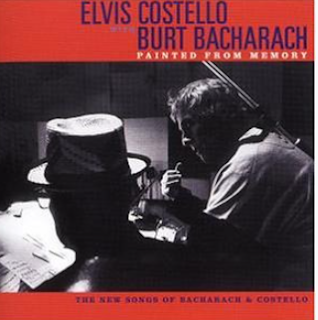
Not so with Costello, who overestimates his native skills to extend his vocal skills. He continually tries to hit the high notes at seemingly the same moment in each song, with his pitch being the equal of having a live magpie taped to your face. It's a horrible, piercing experience before long, and the rationale that it's a brave thing he's doing by using his limited apparatus for the lofty points on the sheet music won't cut ice. Plainly, he's trying too hard. Bacharach, I recall, wrote a good number of spry up-tempo songs as well, and had a sense of humor. Perhaps he felt he needed to get serious now that he was getting some serious attention from critics because the acclaimed Costello deigned to work with him. The album is dour, gloomy, utterly depressed eventually; it would have been best if they canned half the songs here and released only the truly memorable work. It would have been better if they remembered to bring their sense of humor to the sessions when they recorded this thing. The lack of more spritely paced songs--remember that Bacharach among other virtues had a genius for tempos and alterations of time signatures and keys-- and Costello's inadequate vocal range overwhelmed the bright spots with a sad, impressionistic murk. The main problem for many were the vocals--typical of the user reviews of Painted from Memory on Amazon's listing was that Bacharach was in excellent form, but EC dragged the material down. Perhaps someone can present us new versions of the best material with other singers who would be a better fit for the challenges the songs present.
Costello obviously wants to be a master of all styles of music because he loves, seemingly, every style that's ever been invented. His problem is that he nearly always seems eager to out do or improve on established genres, rather than truly adapt the motifs to his strengths as a songwriter. His output starting in the late eighties with Mighty Like a Rose became distressingly erratic. "Inconsistent" is too polite a word. He did sporadically bounce back with a strong release and solid songs, but his wild swerves to projects that turned out to be perfect messes--The Juliet Letters, The Delivery Man, Mighty Like a Rose, Kojak Variety--resulted in my lowering his stature in my personal canon of all-time greats. Once I thought he was the greatest rock poet, but I took that crown away from him and handed it over to Tom Waits, who had a brilliant career start to finish, all killer, no filler.

This is the magic that the best of the Innocent Bystanders creates. Comprised of vocalist Deborah Darroch, Jessica LaFave on tenor saxophone and backing vocals, Ben Nieberg overseeing acoustic guitar and vocals, Steve Semeraro on electric guitar, Donny Samporna on bass, and Steve Berenson behind the drum set. The band brings their distinct skills for the marvelously funky and frayed variety that occupies their second, The Book of Life. The tone is gritty and soulful in ways that transcends barriers and speaks plainly on matters of life on life’s terms, death, getting beaten down but getting up again, and putting one’s shoulder to the wheel again. You get this feeling of strength and resilience on the album’s opener, “No Place to Go,” tenderly offered in a Stevie Nicks-ish croon by Darroch, guitars; drums and bass lay a delicate yet sinewy weave of rhythmic momentum as the tale of hard years, travel, an uncertain fate haunting the troubled road unfolds. Darroch’s vocal delivery hasn’t a trace self-regret; this is a person making peace with their regrets and sorrows with the conviction to move onward, forward. A remarkable song about seeking in the midst of desolate circumstances.
The mood kicks up a notch later in the record’s flow, especially with the saxophone oomph of LaFave’s tenor sax goosing the gospel/ soul-train testifying of the suitably chugging “This Train.” Steady as she goes, Nieberg proffers suitable rhythm and blues wailing on his vocal. This train might be the same conveyance that Curtis Mayfield foretold his listeners with the classic “People Get Ready,” an evocation of that same train as it pulls from the station and goes through the quizzical paces of leading a full and useful life.
The Book of Life covers a broad swath of musical approaches that are lovely to behold in the effortless expressiveness the Innocent Bystanders bring to their well-wrought expanse of American styles. The concluding song, “Lost Things,” evokes Bruce Springsteen and Tom Petty, with a trace of the Arc Angels making this rugged ballad even more alluring than it might have been. Nieberg’s vocal takes on a husky rasp, the band swells and recedes and swells again at points in the narrative for splendid dramatic effect, and you find yourself imagining that there is a man in the center spotlight taking stock of the trajectory of his life and realizes that each trauma, heartache, birth, death, celebration, and catastrophe has all been worth the years of struggle and hard-learned truths. The song seems, to me, to be the point where one’s experience evolves from a sullied timeline of conflicting emotions to becoming wisdom, a living philosophy. The Book of Life is wonderfully unpretentious in the blessedly small-cap wisdom the songs bring us. This is rich, evocative music in a very American grain.
💋💋💋💋💋💋💋💋💋💋💋💋

The material here, however, aren’t about ruing a past of blown chances or plans that didn’t pan out; Dwyer speaks additionally speaks from resilience, putting his shoulder to the cracked a wheel again and persevering. Borderland two is less the tales of a survivor, but a man who relishes the life he has yet to lived. This is somebody who isn’t hanging up his guitar or walking stick anytime soon.Borderland 2 is a fascinating evocation of divergent styles, be it folk, country, blues, or rock and roll. In other words, Americana, the alluring synthesis of North American roots music. Electric and acoustic guitars, keyboards, banjo, harmonica, and drums are the essential seasonings here, organic textured, earthy, and homey, creating an evocative intimacy as the stories unfold. One would expect an entire ensemble to provide a musical outlay this rich, but the credit goes to two musicians, Dwyer himself on guitars, harmonica and vocals, and his associate Ronald E. Golner, who handles the other instruments, who also oversaw the recording, mastering, and production of the sessions. (Let’s note that trumpeter Brett Wagoner provides his skills to good measure on the track “Fuego Grande,” a sizzling Spanish-flavored torch song). The sound resonates, punchy, each note and chord landing precisely on target.
Again, the record is not sallow caterwauling of life gone wrong. Dwyer informs us that he’s got a lot of life left and a lot of fight to go with it, amply laid out in the opening track “I’m Not Afraid.” This is the telling of an old timer, declaring himself as a fool who might have dismissed in some instance, that he’s too old to dread what life might bring to him that do, that he’s been alive too long through too many circumstances to care what the world at thinks of how he lives his life. He sounds more than willing to put up his dukes to defend his right to not care what you think.
Resilience is a theme that runs through these songs. These are notes from an ongoing journal of a man who arises again and yet again after that, convinced to his core that the shame isn’t in falling down, but in staying down. “There Comes a Time” ends the album with the message to the young, the impatient, the impudent, the cocky, the alienated, the arrogant, the afraid, to anyone convinced that their life is at a hopeless dead end so early in their years to take chances, take risks, be unafraid to make mistakes, to fail, to get up and go again when your face is in the dirt, to complete something, to do many things to ensure that on reflection that one didn't spend their life weeping. Michael J. Dwyer, a traveler, a songwriter, a man tempered by time and dared to feel his experiences deeply, tells us with Borderland 2 that it’s worth it all, and he’d do it again if he could.

Made in Ojai by the duo Smitty and Julija (Smitty West and Julija Zonic), it is a tuneful disc, well-produced, lushly arranged, and highlighting the soulful vocals from the pair. The record is a mixed bag of results, with a few of the songs taking a long time to evolve into something more intriguing. “I Just Wanna Sing this Song with You” begins with doleful piano, simple arpeggio figures that dwell a shade too long, with the song easing in slowly to some crystalline vocal harmonies from West and Zonic. It is, though, a longish ballad of laying one’s heart to the glorious presence of another. The duo’s harmonies elevate the words and soar over the hesitant piano in the choruses, infusing the lyrics with heartfelt emotion. This song, though, drags when, I think, it should pick up the pace and rhythmically engage a listener in their joy, and regrettably, this is an element that hampers many of the other songs. Particularly the next song, “Let Her Go,” where the philosophical lesson of letting go of past loves, regrets, and missed opportunities to grow are lost in what becomes inevitable tedium.
Zonic has a fascinatingly vulnerable voice, suggesting a quiver, a quake, a certain fragility that suggests a trammeled soul that has gathered its wits and finds the words, the voice, the eventual wisdom to push on over the horizon. One wishes the song were more melodically proactive in the sentiment and less dirge-like. A listener exhausted by the excess of earnestness through these songs can take a rest with a nice bit of amusement, a tune called “Trust Fund Hippy.”This is a suitably and incisive dig into an obnoxious hipster indulging his counter-culture aesthetic with inherited money, oblivious to his own absurdity. Following suit, the music is up-tempo, with an old-time feeling, rather remindful of the Phil Ochs classic “Outside a Small Circle of Friends.” There is quite a bit to enjoy and admire in Made in Ojai, but one does wish they would have varied the fare, taken it beyond the confession box they seem comfortable in, and engaged their wittier instincts.
Originally published in the San Diego Troubadour. Used with permission.
Obscure Alternatives - Japan (Ariola)


 |
| Song Cycle -- Van Dyke Parks |
:format(jpeg):mode_rgb():quality(40)/discogs-images/R-1679637-1236501002.jpeg.jpg)
Color You, an alt-rock unit residing in the sparky interiors of Los Angeles , awards its new album the heady appellation The Grand Trine. Stepping beyond the title’s intent to perplex and bewilder, we learn through a swift Google search that the phrase indicates “ …a planetary pattern composed of three or more planets in a chart located at the vertices of an imaginary equilateral triangle. Usually all three planets are in the same element (fire, earth, air or water)…”
 |
| AVENUE B--Iggy Pop |
 |
| MUDDY WATERS' Woodstock ABLUM --| Muddy Waters and Friends |
THE GRAND TRINE--Color You Color You, an alt-rock unit residing in the sparky interiors of Los Angeles , awards its new album the heady appellation The Grand Trine. Stepping beyond the title’s intent to perplex and bewilder, we learn through a swift Google search that the phrase indicates “ …a planetary pattern composed of three or more planets in a chart located at the vertices of an imaginary equilateral triangle. Usually all three planets are in the same element (fire, earth, air or water)…”
 |
| STRANGE STORM--Darrin James Band |

 |
| WOW--Moby Grape |
:format(jpeg):mode_rgb():quality(90)/discogs-images/R-750280-1154988971.jpeg.jpg) |
Absent Lovers-- King Crimson
|
 |
| BLUE AND LONESOME --The Rolling Stones |
 “Happy”, included on the Rolling Stones’ album Exile on Main Street is one of their great songs, and Keith Richards does a superb job singing. Richards, in fact, is very much the credible singer, having a hoarse, whispering croak of a voice that marries his blues and country influences. There is a measure of palpable emotion as the guitarist’s haggard voice stretches for a note that might not be his to possess, something like the battered working stiff who finds new reserves of inspiration when inspiration makes him forget the weight of his day and declare that there is in his life that’s worth standing up for. This is a singer whose talents would have blended to excellent effect with the rustic tones of the Bands’ Levon Helm and Richard Manual. I’ve been listening to Exile on Main Street lately, and it’s amazing how this album just seems to deepen with the years: it’s one of those great releases whose basic roots-music emphasis places it in the considerable company such the early Band records or Moby Grape
 MX --David Murray and Friends (Red Barron)
 Devotion, an early McLaughlin early solo job has been getting a lot of play around here the last month or so, mainly because the sound is raw and appealing, and what were the obvious beginnings of a commercial sound hadn't had time to become bad habits. Buddy Miles, of all people, acquits himself surprisingly as the session's designated "rock" drummer, though I wonder what the mix would have been like if it McLaughlin had Mitch Mitchell (or Ginger Baker) on hand. McLaughlin's guitar work is a wheezing grind and buzzing of devices and attachments, fuzz tones and foot pedals galore, and his riffs are choppy, sharp, angular. Larry Young is the textural component here, simply a genius on his outre minimalist take in a tradition still in the making.
