Showing posts with label MISCELLANEOUS. Show all posts

Sunday, December 10, 2023

CARE LESS ABOUT MUSIC?


A recent New Republic article ponders if we are caring less about music than we had before, and goes on (and on) investigating possible reasons, causes of the maybe make-believe malaise in the culture. Still, it gets you thinking, and in due course I did a minor bit of autobiographical cogitation to find out why I have a nearly nonexistent relationship with most music by younger artists that's been  released in the last ten years. But lets stay away from the Bad Sociology of the issue and hardly mention , if at all, the intrusion of technology into the pleasure dome. Technology always intrudes into the pleasure dome. 

There’s a difference between caring less about music and no longer loving music that provided the soundtrack of your youth. It may be that you’re simply tired of songs and albums that have been overplayed for decades. In that sense, it matters little if I ever hear any Pink Floyd records again, love them though I do. And half of the Led Zeppelin songs can also be consigned to the dustbin. Well, maybe not half, but at least two album sides of tracks I no longer get a thrill from, or songs that were weak to begin with. When you get older, your heroes from yore are no longer bulletproof, considering that by the time I turned 71, I had experienced the situations, loves, traumas, celebrations, and catastrophes our friends Dylan, Cohen, Mitchell, Young et al adroitly crystallized in their tune craft. Many of us in the day sat around dark bedrooms and dens with the lights off, stoned or unstoned, listening to the heaviness of the message and thought we were really learning something about life. Aging, though, is the great equalizer, a very efficient means of changing the status and emotional attachments untested youth had on their record collections. 

Gauged against a few decades of actual lived experience, some songs still resonate, while others pale with revisiting. It helps if you’ve been a music writer and critic, a habit and occasional part-time job I’ve indulged myself in over six decades: the unreasonable standards I bring, standards hardly set in stone, have allowed me to have a private canon I can rely on when mood and manners require an unsullied equivalent of the prevailing zeitgeist. Also, it’s not necessarily a matter of being uninterested in new music artists as such, as it’s simply an issue that new music striving for the love of the masses is written for young people and, damn it, I am no longer young. But I do have a considerable record collection. Let it be said that it’s a wonderful thing when I can add a new and young artist to my collection.”


Friday, August 4, 2023

STOP GOING TO FUNERALS FOR THINGS THAT HAVEN'T DIED

 The Spectator (Australia) has wondered out loud if rock criticism, an intriguing and snarking subcatagory of journalism is all but spent. They cite no less an authority than Ed Sheeran to suggest the waning days of music opinion mongering are in the late stages.  Even so, this is more a matter of wondering what the interest in announcing something as officially deceased and irrelevant? These are the sort of pieces that get written late at night because they can be very light on hard facts supporting the assertion, can be allowed to be vague and irritatinging in their collective inability to really take a stance. It's a race against deadline and the assured result is sloppy thinking. Now and then a writer decides to pad his required number of articles he has committed to submit to his editor by taking the pulse of a cultural expression and opining whether the activity is dead. Is theater dead? How about rock and roll? Or jazz, really, is that still a thing? And painting, Christ, painting is as dead as a boot, no? Cinema is dead, we know, and movie theaters are going away?..You get the idea. Some things do, of course, seem to vanish, such as vinyl records and eventually CDs, though they have not completely been eradicated: both have made a comeback among noticeable consumer subgroups. But both things were quickly supplanted when digital formats and the internet trampled the established ways of acquiring music. We know, however, that declarations that specific art forms, from literature to the visual arts, are dead seem more wishful thinking , a hot take of cultural trends that often enough begins with provocative headlines but towards the end of the various squibs that take this tack end up with no conclusion other than sighing “…we will see.” What we have are areas where newer ways of expression, getting news, advertising , expressing oneself poetically , et al, have new ways of coming into being, something that does not mean a death sentence for whatever came before. So this issue as to whether rock criticism is dead or dying? Death and dying are strong and sloppy terms to apply to anything that is ongoing, and I would think that as long as people buy music, they will want to read about it and talk about it and have disagreements about musical artists and the relative qualities involved in ones preferred measures of the Big Beat. Someone will write about a new album or a concert and someone else will read it and the dynamic continues anew. For the diminished role critics play in influencing consumers, well…we will see…

Thursday, August 3, 2023

QUICK RECOLLECTIONS OF TWO 1969 BOOTLEGS

“The only two bootleg albums I ever bought were lIVEr that You'll Ever Be (1969) by the Rolling Stones and The Great White Hope by Bob Dylan (also released in  1969). The Rolling Stones one is entirely dispensable–there is a cult around their live albums that is pure fiction in my view. They have always been dicey in live performance, save for Jagger’s antics. Their legacy is their long line of studio albums. 

The Dylan, though, is genuinely historic, a batch of diverse and wonderfully crafted tunes melodically and lyrically. I still don’t think he is a poet, but the lyrics here-- TEARS OF RAGE, THE MIGHTY QUINN, THIS WHEEL’S ON FIRE, TOO MUCH OF NOTHING-- are some of the finest and most subtle of his career, and his selection of covers are choice and reveal that Dylan, in his prime, could reinvent traditional material and make them relevant to an audience that was starved for something more than cocktails, drunk romance and songs that were thick with cliché and platitude. The Great White Hope has only gotten richer with time. I subscribe to the idea that the best rock poetry are the ones that show the art of what was almost said, which was what Dylan could do when he had all his pistons firing, a mix of idiomatic diction, biblical allusion, a sort of bucolic surrealism , along with a host of other lyric influences that sift through blues, country and such for the sort of mash ups he specialized in. I think we’re on the same page, that his best lyrics work not because they make sense in literal terms but that they give a sense of mood, temperament, whatever the prevailing emotional tone might happen to be for the song, joy, or despair.

 He does this in any number of ways–odd juxtapositions of physical items (lace=knot), cunning use of nonsequiturs to undercut encroaching cliché and sentimentality and suggest there are deeper levels to explore–but the fun in Dylan’s strongest songs-as-poems is the sort of oh-wow factor where you can’t believe he came up with one catchy couplet after another, a sensation similar to (in my mind) to listening to a Coltrane or Dolphy solo where the runs , riffs, and full on phrases exhibit a serial genius. This is my Bob Dylan.”

BARRY ALFONSO:I certainly agree about GWW, Ted. Tackling the value and substance of Dylan's Basement Tapes songs is difficult because, I think, they involve a different standard that you might use for most song lyrics (or poetry, for that matter). There are lines in "The Mighty Quinn" and "This Wheel's On Fire" that are near-gibberish, akin to the silly wordplay in "Polly Wolly Doodle" or "Oh, Susanna." "If your memory serves you well/I was going to confiscate your lace/And wrap it up in a sailor's knot/and hide it in your case" -- this sort of thing has almost no conventional meaning worth treating seriously. It is almost the sort of nonsense you might write in a song if you are holding a place for what you might write later. (I did that in Nashville.) But the FEELING of it is clear -- it is sly and spooky and insinuating and begs you to try to untangle what it is saying. Add to this that the performance of these songs by Dylan and the Band is filled with wacky/ominous emotion. Scarcely any people can write and record stuff like that. I love those songs. Those are my favorite Dylan songs, in fact.

WILLIAM HAMILTON: Breet, chitter, grelb.


Thursday, June 29, 2023

WHAT MIGHT HAVE BEEN AND HOW IT TURNED OUT


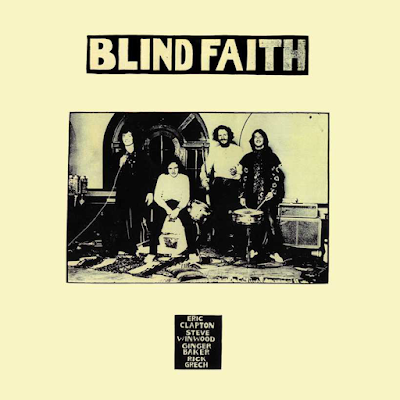
 Theoretically, the Blind Faith super group should have worked, as they brought a demonstrated array of talents to the fold around instrumental chops, vocal strength and in songwriting especially. Though commonly felt by many to be a failure at the time of release, the lone Blind Faith studio release yielded an impressive number of all time gems--” Can't Find My Way Home”, “Presence of the Lord”, 'Well All Right”. Even lesser material such as the structurally awkward “Had to Cry Today” and Ginger Baker's everybody-gets-a-solo excursion “Dow What You Like” provide sufficient joy. The Baker tune especially is worthwhile for Clapton's guitar solo, which to my ears has him revealing, maybe, a bit of influence from Mike Bloomfield's solo on “East West”. The reason for abandoning this project would seem to be the expected issues of drugs, egos, and most likely that their hearts just weren't into it. A shame, they could have been one of the best.


+++

John Lennon had a grudge against bandmate Paul McCartney , so he wrote a song about it , laying everything out except Sir McCartney's name. As an issue of disrespect, it's in a class by itself, but the howler of this whole enterprise centers around the most quoted lyric, “…the only thing you did was yesterday..." The longer view of the Beatles reveals PM's contributions to the creative surges was, in fact, profound, at which point it makes me consider the idea that McCartney would likely have been a pop star of some sort without Lennon. Lennon, always a raw dog who improved vastly as a tune smith , singer, and lyricist due to his association with McCartney, would likely have had a rougher go of it.


Sunday, June 18, 2023

GUITAR RIFFS


Old guitar riffs do not die as long as I live, as they are the soundtrack of many routines and daily walks up the stairs to work, treks to the stores, adventures in scattered beach area parking lots, the journey to the forbidden and familiar knowledge behind a girlfriend’s front door. Or the entrance to a doctor’s office, for that matter. I had often joked that each of us requires a “signature riff”, a power chord mini-anthem ourselves that we have on constant mental standby as we go about our routine tasks and past times; I often imagine the open assault of “Mississippi Queen” commanding a room’s attention once I enter if only to perform the mundane obligation of paying a gas bill. The theme song changes, to be sure–there is no channel changing that’s faster or more assured than what goes on in the car radio dial of the mind–and there are those days when what I carry in my imagined soundtrack in my imagined movie are the genteel whispers of Paul Simon’s three-hankie whining, the grating, rusted scraping of early Velvet Underground, the guitar amnesia of Larry Coryell. It varies according to mood and what lies on the to-do list that day. (Not that I have a to-do list.)

SONGS OF SUMMER


Everyone hates the fact that summer is brief and fall comes upon us much too quickly. In 1966,The Happenings had something to say about that common complaint.' See You in September” is actually rather cheery, with a narrator who says he will pass this way again and enjoy another summer vacation with whomever he's talking to. The best bud, a girlfriend, or boyfriend, straight, gay or cordial, the specifics don't matter in this slight recitation because the background the lyrics set up is the wishful thinking optimism of an earlier time when some pop music was innocent intentionally and meant to shield a listener for three minutes or less against the cultural convulsions that were about to dominate the 60s.


Unlike the Happenings, who took the end of summer as a matter of life and fully expected to have the same kind of fun in the summer still ahead of them. Fully optimistic and even cheerful with the farewells to the friend they will see again. The Doors, on the other hand, were grim, gloomy, moody, sullen and maybe a hint sexy for the 14-17 year olds so eager to see through the veil and get some truth. The end of summer was…the end. A recurring theme with these gentlemen. The Doors also rued the end of summer and the drowsily droned baritone, fashioned by Jim Morrison, wrote a song that made it seem as if this were the end of the world. Many have opined that this was a tune about the loss of youth and innocence and the eventual entrance into adulthood. Perhaps it is on some level, but the level is shallow and I say hooey. The end of summer meant a return to school, or that many teens would have to get jobs or move back in with their parents. Morrison was really decorating a banal displeasure with growing up with a sound that made it seem romantically apocalyptic.


The intensely odd and self-concerned Arthur Lee of Love had seasonal matters on his mind as well in 1967. “Bummer in the Summer”, from their release Forever Changes, is a track both punkish and arty, nearly progressive in sound. It all works as Lee announces his discontinuous frustrations. A summer fling that didn't quite work out. An odd and dynamic merging of Dylanesque talk singing and revved up chords that resemble Them's “Gloria,” this suggests the rap and hip hop styles that came years after it. If not rap, then “Walk this Way” from Aerosmith at least. The middle section with the piano pounding out chords that suggest a jazz inclination is among the many unexpected wonders on this brilliant record.

Saturday, April 29, 2023

Short notes


I witnessed Wall of Voodoo for the first time at the Urgh concerts in Santa Monica in 1980, sharing the bill with Pere Ubu, Dead Boys, Magazine,a wholly transformational encounter. The band applied the ticktock reductionist rhythms with a sense of apprehension. It was almost Hitchcockian, as in any scene when a nervous protagonist under duress hears an overly loud clock ticking away . "Ring of Fire" was masterfully drawn out, and Stan Ridgeway seemed to me the best talk-singer since Lou Reed , a flat, hardened monotone , leering and braced by a slight ironic tone, reflecting LA Noir no less than Marlowe. "I Can't Make Love" was my takeaway from the entire night, an underrated lament of A loser, battered on both sides by the lure and dispatch of the affection he craves. This is a lament of someone so saddled with self loathing that he can't complete a sentence. The pleading refrain of "I'm a nice guy" as the song fades is stark and stripped of illusion, it is Lear without the poetry. The abject despair and self-pity that's revealed is equal parts moving and repulsive, which is a remarkable accomplishment.

__________________________________

The Band's rendition of Tears of Rage, cowritten by Bob Dylan and Richard Manuel, ranks as one the greatest interpretations of a Dylan lyric ever to meet the public ear. One of Dylan's most subtle, evocative, and melancholy lyrics. It exhibits every strength he possessed as a wordsmith when he was at the height of his power, elliptical, diffuse, surreal in the way it can be a snapshot precise in detail and yet remain elusive as to final meaning. Richard Manual's melody, a brooding, and morphing tone poem with quirky shifts in emphasis and patterning and yet maintaining a gospelish flavor, and his vocal I find utterly heartbreaking in its suggestion of a rural family tragedy, incest, insanity. His singing is soulful and mournful , equal parts soul and country wail. He gives Dylan likely the best reading of one of his lyrics to grace vinyl.

____________________________________

In his 1969 book Rock from the Beginning, corrosive critic Nik Cohn maintained that Dylan wrote his best lyrics when he was being mean spirited and out to settle accounts in his rhymes. I'm inclined to agree in part with that; the Dylan who wanted to slay dragons, deliver payback and indict the previous generations for the foulness of the world they brought him into is the Dylan that wrote the most memorable lyrics and are the foundation to claims for his genius. In many ways, Like A Rolling Stone was a prototype for what eventually became rap , where the talking blues tradition Dylan emulated early on morphed to the sardonic talk-sung bray of "Rolling Stone" . And of course, there are several Dylan songs from the time that would fit the same description, Its Alright Ma, Masters of War, Gates of Eden, Desolation Row. But I thought Like a Rolling Stone in particular begged for a hip hop rendition, to how Dylan's dread, anger and agitated rhymes would hang with different generation's beats. 

____________________________________________________

1998's Elvis Costello/Burt Bacharach collaboration Painted from Memory was a project that should have worked but tragically did not. It seemed like a sure thing, two pop music masters in a team up that ought to have been magic .Instead, the enterprise got stuck in a ditch, wheels spinning, engine roaring uselessly. There is an insistence on medium ballads or funeral march ballads, sadder-than-dead fish torch songs. There is merit to a good number of them, as Bacharach is the Beethoven of ageless heartache, but the melancholy turns into a stupefying torpor. It had been remarked on point that Bacharach found his perfect vocalist in Dione Warwick, a singer with range, timing, and tone who could seamlessly negotiate the deceptively tricky turn arounds in his melodies. Not so with Costello, who overestimates his vocal abilities. Each song he sings, he attempts to hit the high notes at seemingly the same moment, as if he had a live magpie taped to his face. It's a horrible, piercing experience before long, and the rationale that it's a brave thing he's doing by using his limited apparatus for the lofty points on the sheet music won't cut ice. Bacharach, I recall, wrote a good number of spry up-tempo songs as well, and had a sense of humor. Perhaps he felt he needed to get serious now that he was getting some serious attention from critics because the acclaimed Costello deigned to work with him. Over time, the album is dour, gloomy, and utterly depressing; they should have canned half the songs and released only the truly memorable work. It would have been better if they remembered to bring their sense of humor to the sessions when they recorded this thing.

A better album, much better, is an earlier EC disc from 1986, King of America. Costello loves rummaging around in many genres, most of it being half-baked, over wrought, or atmospherically formless for the last decade. With country and western, his has been a case of trying too hard to get that stoically restrained emotionalism that is the genius of the truly great singers. This song, though, is where he gets it right. The melody is doleful , on the downbeat and yet brisk in tempo, the lyrics are a nicely constructed metaphor that sustains itself through each chorus, and Costello's singing is tuneful and free of the vocalistics he often mistakes for emotional dynamics. Here he sounds matter of fact, clear-headed, a little choked up as he admits the larger truth of a doomed love affair. The quivering near sob on the last lines is perfection.

__________________________________


Friday, April 28, 2023

ANOTHER BURKE FROM BEFORE TIME BEGAN

 Honestly, I love critics who are smart and love the sound of their prose so much that they soak their subject in overripe, purplish grandiloquence, which makes getting to their usually inane insights a fun adventure in well-managed if excessively mannered evaluations of popular culture. The present example is the photograph accompanying his piece, a review of an Elvis Presley album by a G.C. Burke, no relation, in the May 1957 issue of High Fidelity magazine. (My thanks to music writer Mark Miller, who posted this intriguing specimen in a Facebook group dedicated to music journalism.) 

Perhaps not so oddly, I feel some kinship with Mr. Burke and wonder if he’s a distant and likely belated relation. I read John Simon for years in New York Magazine, The New York Times Book Review, and The National Review, and often marveled at how a man of such obvious erudition and flawless prose ability could be so magnificently elegant in expressing amazingly pedestrian opinions of books, plays, films, and movies. His vitriol couldn’t elevate his sour takes on the arts from the routinely knee-jerk reaction. I wager that Simon’s vocabulary and acerbic virtuosity buffaloed his readers and editors with the flashy pyrotechnics of his word-slinging; what I thought of as Simon’s conspicuous ineptitude as a critic of cultural expression was summarily overlooked.

Burke obviously wants to consider himself a public intellectual, a mission much greater than being a mere record reviewer, and here attempts to pigeonhole the ill-making cultural habits of the times that are spoiling the rest of us. Sophistry itself, this amateur sociology and such, but what fun it is to read a smart person use every weapon in his arsenal to swat a fly. But again, honestly, quite honestly, quite vainly, G.C. Burke’s makes me think that those of us sharing the last Irish-borne surname share a genetic fascination for padded hyperbole. (Forgive me my indulgence if I’ve elevated myself to the likes of Edmund and Kenneth Burke, genius scribblers both.) Obviously, it would seem, that I’m inspired to indulge my verbal excesses after reading G.C. Burke’s energized dalliance with the philosophical broadside. Perhaps I can find a collection of his further thrashings of pop musicians of his time and become insufferable myself.


Friday, October 21, 2022

BLUES WHITE OUT


Rock stars with awful voices by formal standards are some of my favorite singers of black rhythm and blues music. Let me try to clarify. Mick Jagger is a vocalist who learned to work brilliantly with the little singing ability God deigned to give him: knowing that he didn't have the basic equipment to even come close to simulating Muddy Waters or Wilson Pickett, he did something else instead in trying to sing black and black informed music-- talk-singing, the whiny, mewling purr, the bull moose grunt, the roar, the grunts and groans, the slurs and little noises , all of which he could orchestrate into amazing, memorable performances.

One Plus One(Sympathy for the Devil)Godard's film of the Stones writing, rehearsing and finally recording the song of the title, is especially good because it captures the irresolute tedium of studio existence (in between Godard's didactic absurdist sketches attempting to address the conundrum of leftist media figures being used by invisible powers to squelch true revolutionary change). More than that, we see Jagger piecing together his vocal, his mewling reading of the lyrics from the lyric sheet; his voice is awful, in its natural state. But we do witness Jagger getting bolder as the song progresses through the endless stoned jamming, a grunt added here, a raised syllable here, a wavering croon there. Finally, we are at the last take, and Jagger is seen with headphones on, isolated from the others, screaming his head off into a microphone while the instrumental playback pours forth, in what is presumably the final take.

Jagger, all irony and self-awareness, created something riveting and for all time with the marginal instrument he was born with, and is part of what I think is a grand tradition of white performers who haven't a prayer of sounding actually black who none the less molded a style of black-nuanced singing that's perfectly credible: Mose Allison, Van Morrison, Felix Cavalari (Rascals), Eric Burdon (early Animals), Peter Wolf, late of the under appreciated J.Geils Band.We cannot underestimate Keith Richard's contribution to Jagger's success as a vocalist. Someone had to know how to write tunes Jagger could handle, and Keith was just the man to do it. Richard's guitar work, as well, riffs and attacks and staggers in ways that match Jagger's strutting and mincing. Writing is everything, as always.t's an inescapable fact that blues is an African American art form , as is jazz and, for that matter, rock and roll at its most vital, and that there are talented, brilliant and exciting black musicians who continue to play the music, innovate within its historical definitions and extend those definitions to keep the music contemporary, alive, and most important, relevant to the way people, players and listeners, live today.
It's my belief, inscribed deeply on the most fundamental set of moral convictions I have, that to ignore the plentitude of black talent, whether they are young, middle aged, or elderly, if you're a music editor, a record company executive, a promoter specializing in blues festivals, a club owner highlight blues and roots acts, is racism, clear and simple. It's a racism on a subtle level, but damaging all the same; a decision was made to exclude black musicians from this list. Compiling a list of the worthy is always problematic,fraught with all sorts of dangers because any number of readers can be offended for insular reasons no writer can predict. But what's offensive about this list is the laziness of the selection. I happen to like a number of the artists here and believe musicians like Black Keys, Joe Bonamassa, Susan Tedeschi and others are legitimate blues musicians.
Their skin color isn't their fault, and , to me,the quality of their chops and the authenticity of their feeling are "real". I will also give the writers credit for including a good number of women on the list.Still, the lack of black musicians is inexcusable and reveals a conspicuous , egregious choice by the editors to remain loyal to their skin hue. Where was Sugar Blue? Lucky Peterson? The Eric Gale Band?Shemekia Copeland? Alvin Hart? Sapphire?Gary Clark Jr? Keb Mo? These players deserve wider recognition no less than the ones who made the list; I have a strong, strong suspicions that an inexcusable laziness directed the selection process, formed, no doubt, by a profound lack of curiosity on the part of the "critics" who, by the definition of their job, are supposed to knowledgeable and curious about things that fall outside their comfort zone. I suspect also that those making the selection were entirely white; as such,they stuck with the skin color they are most comfortable with.


Sunday, September 27, 2020

HIP RECORD COLLECTIONS


The reasons Beatle fans in general (rather than only) "hipsters" prefer Revolver to Sgt.Pepper is for the only reason that really matters when one is alone with The reasons Beatle fans in general (rather than only) "hipsters" prefer Revolver to Sgt.Pepper is for the only reason that really matters when one is alone with their iPOD; the songwriter is consistently better, the production crisper, the lyrics are effectively "poetic"  without the florid excess that capsized  half of Sgt.Pepper's songs on their iPOD; the songwriter is consistently better, the production crisper, the lyrics are effectively "poetic"  without the florid excess that capsized about half of Sgt.Pepper's songs. Perhaps most important, though, is that  you could still listen to Revolver and still regard the Beatles as a working band . It might be a better bet that musicologist would be a better choice to pick apart what made the musicianship on this record so alive and cogent, but a big attraction in my life is that these guys still sound like a band showing up for a gig, setting up their own gear, and ready to play . It may be nostalgia, but something was lost when Sgt. Pepper became the standard by which most  Beatles records after it would be judged, two sides of special effects, guest shots and  flailing ambition toward the Art Gesture. Revolver was the band still in work shirts. 

It might be compared to Miles Davis when he was performing with his classic bands--John Coltrane, Wayne Shorter, Herbie Hancock,Tony Williams, Ron Carter, et al-- with a long string of releases like Birth of the Cool and Kind of Blue (name your favorite here)and when he turned to the jazz rock fusion of Bitch's Brew and On the Corner, which featured the endeavors of Chick Corea, and John McLaughlin . The first mentioned releases are conspicuous examples of bands sensitive to each members nuances, strengths and weaknesses, quirks and signatures, combing with the material to offer adventurous improvisations as part of an ensemble effort, while with Bitch's Brew Davis and his producers culled performances from hours of taped jam sessions where ideas and motifs were explored to produce albums that are, in effect, mosaics. The general tone of the later releases was less the sparks that occur between musicians confronting each other in performance but rather something more theatrical; thought the musicianship is rather magnificent and often times bracing on the later electric releases,they seem more in service to Davis' cantankerous muse , performing as directed. As much as I admire and respect the accomplishment of both the Beatles and Davis in their late work, studio craft and all, a larger part of me would have preferred if the musicians had found a way to expand their horizons without abandoning their identities as bands. The Rolling Stones sought to produce their own version of Sgt.Pepper with the releases of the bloated and wasted Satanic Requests, and it's a fine thing to appreciate the Stones self critical response to bad notices (and perhaps some sober listening to the record, after the fact); they abandoned their attempts to compete with the Beatles on their new turf and returned  to riffy, R&B inflected rock and roll. 

What hasn't been mentioned here is that Frank Zappa released his first Mothers of Invention album Freak Out on June 27, 1966, a full month before the Beatles released Revolver in August of that year. Zappa was an erratic, quizzical, quarrelsome presence, but he achieved things with that album that neither the Beatles nor the Stones came close to; both those bands were more influential in the pop music sphere, where their separate approaches to including cross genre and experimental gestures made for pleasant and easily appreciated (and imitated)music for a large record buying public. Zappa, though, with his solid chops as composer, producer, guitarist, satirist and multi media maven, was miles further up the road and around the bend with respect to advancing the primitive ways of rock and roll into an art form. A good amount of Zappa's early music remains challenging to comprehend, which is another way of saying that it's hard to sit through and that it's downright ugly. The ugliness, though, wasn't merely my limited aesthetic; Zappa cultivated it, advanced it, gloried in it. Now that's integrity.  But the stuff that sounded ugly decades ago still kills small animals today.

Saturday, February 2, 2019

THE MESSAGE AND THE MESS IT MADE

Debating what constitutes authenticity is a nice way to chase your tail, but is a fun way to pass the time when there's nothing else making demands on your time. It's not a waste of time since it is a way for us to define and articulate What Matters in life beyond our bond with the Banks and the Legal System. It is what makes life a pleasure, and a large part of that pleasure is maintaining the capacity to be pleasantly surprised.I've preferred to remain agnostic in matters of musical taste; pragmatic might be a better word. Or perhaps my tastes merely change with time. In any event, I tend to think that anyone committed to trying to make living playing music and performing, activities from which there are no guarantees of financial security (or even an audience) can't help but be sincere. One might dislike the motive or the personality, but the emotion is authentic enough. Better to consider whether the music is at least honest, or better yet, if it's done well: whether music, lyrics, voice, style work on their own terms, makes for a more interesting set of topics, and a more compelling record collection.  What those terms turn out to be might be, at first, seemingly unacceptable or contrary to everything you held as essential to quality. But to paraphrase a famous line contextualizing Modern Art, most original art forms seem at first ugly and horrible; they emerge ahead of the curve and the rest of the culture has to catch up. Not everything gets past the finish line, though, as a review of your record collection reveals. I'd wager we all have many albums from bands and artists we thought were heavy and groovy back in the day that now makes us scratch what's left of our hairline, wondering what we were thinking.


It was after I slid into my forties where the other songs and albums by Zeppelin reemerged on my radar and revealed a band that was more diverse, musically, than the popular invective allows. Where I lived at the time, Zeppelin fans were just as likely to be listening to the Band, Van Morrison and CS&N, along with other folks "sissy" artists as they were the macho sounds of hard rock. Like the Beatles or Steely Dan, Led Zeppelin were studio artists, where the studio was the proverbial third instrument. Live, they were one of the worst bands I've ever seen--though they sounded pretty damned good when I saw them in '67 (?) on their first US tour with Jethro Tull--but in the studio, their music was finessed and honed, typical in those days. For all his faults as a faulty technician in live circumstances, he is a producer who brought a fresh ear to the recording process and came up with ideas that circumvented the routine dullness and rigor that's become the bane of less able hard rock and metal bands after his Zeppelin's break up.

The only real bad aftershock of " Sgt Pepper's" and other "concept albums" from the period was the mistaken notion by other artists that there had to be one grandiose and grandiloquent theme running throughout both sides of their albums in order for their work to be current with the mood of the art rock of the period. The Beatles succeeded with "Sgt. Pepper", "Magical Mystery Tour", and, and "Abbey Road" ( easily their most consistent set of material, I think) because they never abandoned the idea that the album needs to be a collection of good songs that sound good in a set: overlapping themes, lyrically, are absent in the Beatles work, unless you consider the reprise of the Pepper theme song on a leitmotif of any real significance (its use was cosmetic), although musical ideas did give the feel of conceptual unity track to track, album to album. Lennon and McCartney and Harrison's greatest contribution to rock music was their dedication to having each one of their songs be the best they could do before slating it for the album release. For other bands, the stabs at concept albums were routinely disastrous, witnessed by the Stones attempt to best their competitors with the regrettable 'Satanic Majesties Requests". The Who with "Tommy" and "Who's Next" and the Kinks, best of all, with "Lola", "Muswell Hillbillies" and "Village Green", both were rare, if visible exceptions to the rule. "Revolver" and "Yesterday and Today" are amazing song collections, united by grand ideas or not. I buy albums, finally, on the hope that the music is good, the songs are good, not the ideas confirm or critique the Western Tradition.

The conventional wisdom is often wrong, but not always, and I think the popular opinion that Sgt. Pepper is a better disc, song by song, than Satanic Majesties is on the mark. Majesties had The Stones basically playing catch up with the Beatles with their emergent eclecticism and failing, for the most part. That they didn't have George Martin producing and finessing the rough spots of unfinished songs marks the difference. Majesties, though does have at least one great song, "2000 Man", and a brilliant one, "She's A Rainbow" For the rest, it sounds like a noisy party in the apartment next door. The album sounds like a collection of affectations instead of a cohesive set of songs. Cohere is exactly what the tunes on Pepper did, good, great, brilliant, and mediocre. The sounded like they belonged together.