Showing posts with label WAYNE RIKER. Show all posts

Wednesday, January 11, 2023

WAYNE RIKER SHREDS THE BLUES

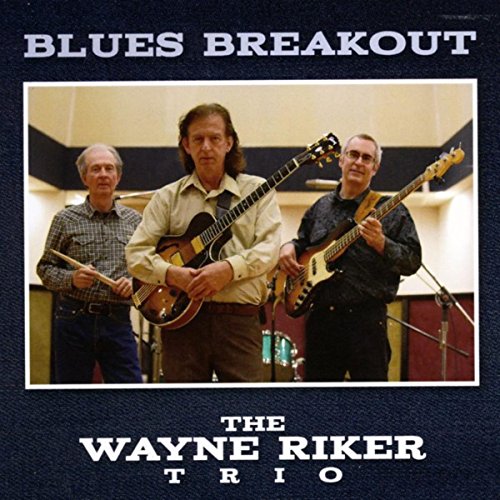
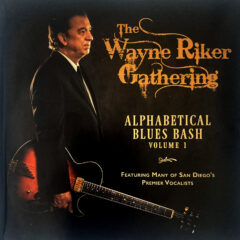
Little can  can   be added to the praise blues guitar maestro Wayne Riker has already gotten,. Much of it bears repeating, with vigor, if only for of music lovers unfamiliar with the magnificence he applies to the blues. In recent memory, Riker has released a scintillating slew of top tier blues guitar efforts, particularly on two grand slam showcases. The first, 2018’s Blues Breakout, is a hard power trio effort with a surfeit of the guitarist’s quick-witted licks. Wayne fills all the spaces and enter a rapture as his long improvisations overrun with slinky, sleek, and slicing ideas, one atop the other. The second, 2020’s Blues Lightning, a pulsing session with swift riffs, a well-greased rhythm section, and a series of guest vocals by an assemblage of the best blues singers available. Punchy, rocking, the guitarist, band, and his guest singers show a proficiency in feeling and finesse for a variety of r&b categories. His new album, Alphabetical Blues Bash Volume l, has a new edition of the Wayne Riker Gathering with bassist Oliver Shirly lll drummer Marty Dodson, and a familiar cast of grit-worthy guest vocalists. As with Blues Lightning, the new release highlights a familiar cast of grit-worth guest singers, Shelle Blue, Lauren Leigh, Billy Watson, Janet Hammer, Deanna Haala, Debra Galan, Ron Houston, Michele Lundeen, Liz Ajuzie, Rebecca Jade, and Ron Christopher Jones. The strategy of the record is an alphabetical, A through M, gathering of diverse blues classics, famous and obscure, highlighting both the quality tones of the respective vocalists and t Riker’s understanding of styles and nuance. An additional pleasure of ABB Vol l are the instrumental pieces, brief impromptus sans vocals where the guitarist’s virtuoso sense of touch is on full exhibit. A tune that grabbed me straight away was a funky version of Sonny Boy Williamson’s “Checking Up on My Baby.” Riker, and company jack-up the pace, with Wayne’s guitar work pops and punches in rhythmic precision, and his solos add a cutting series of blues licks against the rock steady backbeat. Lauren Leigh’s vocal is hot spice and fire, strong and brassy, with a bit of Aretha coming through as she soars on the high notes.

Scintillating as well is the instrumental rendition on the Robert Johnson -Elmore James work horse ‘Dust My Broom.” Hewing to the traditional arrangement, Riker’s slide guitar states the swooping introductory riff with a smooth, glistening tone and touch as he coaxes, cajoles, and caresses a gallantly melodic improvisation that simulates a singer’s expression of wonder and woe. Riker’s configurations swoop and loop over, and around the foundation. His taste in short fills, quick riffs, roiling accents in the high registers are applied with a painter’s sense of how to fill space. The classic Peggy Lee hit “Fever” (written by Eddie Cooley and John Davenport) receives a sultry interpretation by Jane Hammer, who does well with the low-key arrangement, as her whisper -like phrasing works sexily with Riker’s subdued chord work. This is the sound of seduction.; the guitar solo, spare, framed by exquisitely cresting blues bends and shadings, is the textbook example of creating musical tension and then releasing. Rocking harder is the take on Don Nix’s “Going Down,” a blues rock standard that’s had pulverizing iterations by Freddie King, and Jeff Beck, among others. 

Wayne Riker takes up the tune and refuses to take a back seat. His guitar work soars, stings, and wails down the descending progression, mischievously teasing the edges of Deanna Haala’s in-your-face lead vocal. Especially bracing, in a pleasant way, is the revival of Howlin’ Wolf’s “Killing Floor,” pushed hard by Michele Lundeen’s rust-coated vocal. The band digs in hard on the changes, with bandleader Wayne unleashing a glorious and bittersweet solo, every note hitting the target dead square. I recommend paying special attention to the two other guitar displays on this fine blues outing, Bill Doggett’s “Honkey Tonk” and ‘Hank Williams’ “Move it Over.” Wayne Riker performs with the feeling and a virtuoso’s ease of play. He is simply wonderful at finding the spirit, emotion, the vibe, and verve of a song and then bringing it out with his guitar in wonderful, atypical ways.

Tuesday, December 1, 2020

HOLLER, STOMP AND RIFF WITH WAYNE RIKER


Blues Lightning
The Wayne Riker Gathering
The last we beheld guitarist Wayne Riker was on his 2018 release Blues Breakout, a spectacular exhibition of fretboard heroics. Known locally and nationally for  mastery of  a variety styles, the previous album was Riker in a mood to blaze the blues.It was, to my ears, the most impressive display of blues guitar know-how since Johnny Winter's fabled  Second Winter .  Riker is a very distinct, even singular stylist, of course, but what he shares with Winter is an unerring sense of melding technique, taste, flash and feeling into each phrase he puts out there. Wonderfully fluid , he makes it seem that he can make his guitar convey the emotion and attitude he feels the moment he feels it; this disc is the kind of long-form improvisation which renews itself with each chorus. Each solo our friend Wayne essays forth is packed with what might be called The "Wow Factor”.

The new record Blues Lightning  continues this ride, with Riker this time availing himself of another able musicians, a quartet with Riker on guitar, Doug Kvandal on organ, Mackenzie Leighton on bass and Walt Riker on drums. A briefer album Blues Lightning has six hard-sizzling tracks, recorded live on three different dates at San Diego's Studio West. The mood up-tempo, with enough of B.B. King’s feel for elegant hullabaloo. The band throughout demonstrates a flawless sense of what how to play the changes,  with bass and drums locked into a neat habit of propulsion , keeping the music tight while allowing it rock hard . Riker's guitar work is a revelation to anyone who had loved his accelerated dexterity from the 2018 release. This time his breaks are sweet, the phrases more voice-like , with a  very use of seeming obligato statements, superbly use of pauses between riffs, and an emotionally pulverizing feeling for the high blues bend, controlling with a vibrato at the end of the line , compelling your author to slam his hand on the coffee table a few times.  The band mix is spicier with Kvandal's adroit work on the Hammond B-3 organ work, producing swells of funky, grinding texture that weds Riker's spikey guitaring and the rock-solid rhythm section. He fills gaps, offers short phrases to underscore vocal lines, and is a glorious second voice on his own solos, spare, resonant, eternally funky. Guitarist and organist engage in a continuous series of quick- witted dialogues and call -and- response.As mentioned before, the album, this release has only 6 tracks, each of them a glistening gem of finesse and feel. But what brings Blues Lightning even more intoxicating is the are the six powerhouse vocalists, Leonard Patton, Shelle Blue, Deanna Haala, Scott Mathiasen, Lauren Leigh Martin , and  Michelle Lundeen.  Each vocalist applies their potent skills to their respective songs. Every hoop, holler, and belted testament to the ironic ways of life and love, a subtle array of emphasis and insight. It’s a one of the record's added pleasures that listeners get to appreciate the contrasting yet complementary contrasts that makes the music even more electrifying.

We range from the subdued and conversational truth telling of Leonard Patton's reading of the B.B.King classic "Everyday I Have the Blues "(composed by Memphis Slim) ,  a vocal marked both by restraint and conviction in the singing while the band provides a sprite, marauding groove, to the classic blues shouting brought on by Scott Mathiasen on Freddy King's "Tore Down" ( written by Sonny Thompson), a snappy and strutting shuffle highlighting the singer’s grand and soulful rasp over the percolating ensemble. Shelle Blue’s reading of “W-O-M-A-N” ,  composed by Dorothy Hawkins, Abbey Mallory, Jean Mitchell  and Jamesetta Rogers, is a sexy and assertive response to the male-point of view of  “I’m A Man”, reminding everyone in the room that women are full partners in the life they have with their mates.  The B.B. King arrangement of “Rock me Baby” is sufficiently  growled, groaned and soulful as rendered by Deanna Haala’s declarative voice .

 Michele Lundeen’s vocal on the blues -torch song ballad “That’s Why I’m Crying” (composed by Samuel Maghett)  brings a hint of the sassy earnestness of Eartha Kitt to the testifying. Riker’s guitar fills and his solo on this tune, incidentally, are quite thrilling, responding to the highs and lows of Lundeen’s matchless singing.Singer and guitarist create unbearable tension until Riker cuts loose with a bravura solo, eloquent and slashing. The solo is an exquisite showcase of two-fisted blues work, as is , in point of fact, the entirety of Blues Lightning.  Buy the record and do as I do and place the disc on while having your morning coffee. Twenty minutes of that in the A.M. and I am ready to seize the day.


Monday, October 8, 2018

WAYNE RIKER BLOWS IT UP

BLUES BREAKOUT--
The Wayne Riker Trio

Image result for WAYNE RIKER TRIO
Longtime San Diego guitar stalwart Wayne Riker is an outstanding musician, a fretster with enviable finesse, fire, and fluidity who’s had his skills showcased in many ways,  in big band setups, country outfits, coffee house duos, straight blues band, and more besides. Lately, he’s been pushing the guitar upfront with the Wayne Riker Trio, a blues threesome who make the objects in the room shake with a simple formula: while bassist John Simons and drummer Walt Riker provide the steady, earnest, unflinching rhythmic backbone, lead guitarist Wayne lets it fly, unleashed.  

Their new album, Blues Breakout, is literally a series of  5 extended guitar improvisations, each in a different groove, style, tempo, and steadily maintained by the solid rhythm section in unflinching precision. At the same time, Wayne fills in all the available space. There is a lot of room to fill. Still, Riker is one of those seasoned players who has listened broadly— traces of BB King, Chet Atkins, Jimi Hendrix,  Joe Pass reveal themselves in Riker’s cascading phrases—and assimilated the variety into a sweetly swift and effortless style. On “Black and Blue Boogie,” the guitarist starts his soloing out the gate, rapid-fire runs dancing along with the unyielding precision of the bass and drums, with Riker inserting punishing blues bends that snarl and growl as the mood demands and alternating his approach with each chorus he takes. A jazzy sting of notes is quickly followed by some clean, pointillist bluegrass/ country playing, followed again by some marvelous juxtaposition between a swampy, bassy sound, a low E string thump, and casually executed ostinatos, sustained notes that keep all this busy virtuosity in line with a specific vocal quality that might otherwise be lacking.  The best of the 5 tracks is “Bleeding Blue,” a six-minute slow blues that highlights Wayne Riker’s superb sense of nuance and phrase-making in a 12 bar format. 

He is not one of those players who plays a phrase and will pause longish before he plays another. Like the critically underrated Johnny Winter, Riker follows one idea with another, shifting rhythmic emphasis and varying the voicing of the finite form to create tension. His lines are rapid,  precise, but never sterile.  His ideas cascade gloriously until you think his virtuosity will overwhelm everything else, but there is a canny sense of pacing here.  When you suspect he’s run of ideas, yet new, fresh variations are sounded.  Blues Breakout is more or less a one-man show, with the rhythm section being relegated to maintaining a solid grounding for Riker’s pyrotechnical exuberance. One might wish for stronger song orientation, some vocals, and less showing off. I am pleased Riker chooses to show us what he can do, uncorked, a guitarist unchained.