Showing posts with label GREIL MARCUS. Show all posts

Sunday, March 29, 2020

Rolling the stone uphill


Like a Rolling Stone: Bob Dylan at the CrossroadsAuthor Greil Marcus made a name as a rock critic by insisting that the tide of history is directly mirrored by the pop music of the period. This can make for exhilarating reading because Marcus is, if nothing else, an elegant stylist given to lyric evocation. But it is that same elegance that disguises the fact that he comes across as a middling Hegelian; the author, amid the declarations about Dylan, the Stones, the Band, and their importance to the spontaneous mass revolts of the sixties, never solidifies his points. He has argued, with occasional lucidity, that the intuitive metaphors of the artist/poet/musician diagnose the ills of the culture better than any bus full of sociologists or philosophers and has intimated further that history is a progression toward a greater day. Marcus suggests through his more ponderous tomes—Lipstick Traces, Invisible Republic, The Dustbin of History—that the arts in general, and rock ‘n’ roll in particular, can direct, in ways of getting to the brighter day, the next stage of our collective being.
Like a Rolling Stone: Bob Dylan at the Crossroads is an attempt to assemble a history of the pivotal song, bringing together well-worn facts about dates, names, and incidents that have been amply discussed in many previous studies of Dylan’s life and work. The idea buzzing underneath Marcus’ account of the people, places, and things that led up the creation of “Like a Rolling Stone,” the six-minute transitional masterpiece that made rock and pop musicians do a hard left turn, was that Dylan was the hero in history and was not aware that he would be a hero. Known and more obscure facts about Dylan’s life and writing are presented breezily. Brought to us are short, sharp glimpses of how Dylan moved from being an imitator of Woody Guthrie and backwoods balladeers to a hero of the civil rights movement. He was fascinated with French Symbolist poets Rimbaud and Verlaine and the Beats (especially the barbed-wire prose of William Burroughs).
The diffusely presented elements eventually lead to Dylan’s controversial decision to abandon folk music and “go electric.” It’s conceptually intriguing for Marcus to focus on the titular song and the entire album it was drawn from, 1965’s Highway 61 Revisited. The incidents, the details, and the exchanges—real and imagined—of who Dylan was working and socializing with at the time of the recording of “Like a Rolling Stone” are fascinating in themselves. Still, the elliptical style is frustrating as one finishes one chapter and starts another: you begin to wonder when the data begins to cohere into an argument for what it all means. Marcus prefers a gestalt approach, to have his topic appreciated from the many obscure incidents instead of having everything presented in complexity theory. The reader is likely supposed to understand what he’s getting at without the professor’s hand directing him back to the chalkboard diagram. An admirable trait in more skillful writers, but Marcus is often lost in the smallest implications of any one piece of evidence. The lack of even the slightest thesis statement, the failure to follow through on an intriguing idea that arises from his research is maddening.
Lucky for the reader, Marcus is an engaging prose writer, and one can forgive to a degree for not being clearer with what he was getting at. His preferred method seems to be inference rather than careful argument; there is something in his tone that seems to be inspired by the early poems of Eliot and William Carlos Williams. Like them, he seems content to let the “sense-making” to the reader. I suppose everyone knows a character like Marcus, a smart person who makes smart declarations about large, expansive topics but lacks the skills or willingness to make a formal argument.
Marcus, though, isn’t the one to draw us the map. But what has been aggravating with Marcus since he left the employ of Rolling Stone and began writing full-length books and essays for cultural journals is that he chokes when there’s a point to be made—he defers, he sidesteps, he distracts, and he rather gracelessly changes the subject. Again, this can be enthralling, especially in a book like his massive Lipstick Traces the Secret History of the 20th Century, where he assumes some of Guy DeBord’s assertions in Society of the Spectacle and situates rock ‘n’ roll musicians in a counter-tradition of groups that spontaneously develop in resistance to a society’s centralized ossification and mounts an attack, through art, on the perceptual filters that blind the masses to their latent genius.
He never quite comes to the part where he satisfyingly resolves all the mounting, swelling, grandly played generalizations that link Elvis, the Sex Pistols, and Cabaret Voltaire as sources of insight geared to undermine an oppressive regime. Still, the reader has fun along the way. Marcus wants to be a combination of Marcuse and Harold Bloom. He rarely accomplishes anything, the singular criticism either of them produced in their respective disciplines, political philosophy, and literary criticism, but he does hit the mark often enough to make him a thinker worth coming back to.
Marcus has written so much about Dylan or has absorbed so much material that he can produce a reed-thin critique on one song and pretend that it is much more than what it really is. The problem is a lack of thesis, a conceit Marcus at least pretends to have with his prior volumes; he depends entirely on third-hand anecdotes, half-recollected memories, and a flurry of details gleaned from any one of the several hundred books about Dylan published over the last 30 years. This amounts to little more than what you’d have if you transcribed a recording of the singer’s more intense fans speaking wildly, broadly, intensely amongst themselves by passing coherence for Sturm and Drang. For the rest of us with a saner appreciation of Dylan’s importance, Like a Rolling Stone is a messily assembled jumble of notes, press clippings, and over-told stories. Marcus, obviously enough, attempts an impressionistic take on the song, but the smell of rehash doesn’t recede, ever.

Thursday, March 14, 2019

GREIL MARCUS ON THE DOORS


Marcus is one of the remaining first-generation Rolling Stone rock critics who, in his old age, has evolved into something of a Methuselahian sage for the artist and band's populating the Rock and Roll Canon. He is a fine writer, beautifully evocative at times, a widely read gent who brings his far-flung references of history, aesthetics, politics, and mythology into his generalized ruminations on the movemen
t of human history and how it was reflected and/or caused by the emergence of pop, rock and soul music. His idea, if he has any thesis at all, is that these were not merely forms of entertainment and distraction, they were cultural forces that changed the way we live. Marcus, as fine a prose stylist as he can be, and as momentarily persuasive as he can seem in his richer passages, actually puts forth little in the way of criticism; he rarely in his late writings spends the time to convincingly let you how songs, lyrics work internally. Craft is not on his agenda. 

With The Doors he does a good job of explaining what I've always felt for some time, that Jim Morrison was pompous,, vacuous to major extent, a mediocre poet, a pretentious intellect who happened to have some things going for him: good looks and sex appeal, an appealing baritone voice could bellow or fashion a slumbering croon, and that he was in a band of good musicians that compelled him, in the songwriting process, to peel away the mostly dreadful riffing in his poems and boil it all down to the genuinely strange, exotic and provocative. The result of that combination of Morrison's affectations and the talents of the other band members made for a number of first-rate original songs. Save for the near perfection of their first two albums, it also made for some mostly uneven records where Morrison's drunk insistence on being a drunk put his worst tendencies on full display. 

Marcus is smart and remarkably succinct here, rendering shrewd judgments, the key one being that while saying up front than in any other life Morrison would have yet another counter-cultural tragedy left for dead and forgotten, rock and roll made him at least briefly pull his resources together and give the world something memorable beyond his pretentiousness. TheThe Doors were a mixed bag for me; the first two albums are among the most important rock albums of all time, with the remainder alternating between the proverbial poles of brilliance and balderdash. As a band, they were simply sublime and unique, with the odd combination of blues, flamenco, classical, jazz, Artaud and epic theater being crafted in their hands to create a sound and feel that was singular and instantly identifiable. As a vocalist, Jim Morrison was often as evocative as the greatest fans proclaim, and it fit the half-awake twilight that seemed to be his constant state of consciousness. 

As a poet, though, I thought he was simply awful, fragmented, crypto-mystic surrealism that, save for some striking and memorable lines, collapsed from its flimsy elisions and obtuse vagaries. In his posthumous collections,, the pieces read too often like the notebook jottings of an introspective 17-year-old. I say that as one who was an introspective 17 year and is now an introspective 65-year-old. Morrison might have become the poet he wanted to be had he been able to write, edit, and finesse his work as he desired when he left for Paris. What I will say, though, is that being the vocalist in the Doors gave him the opportunity to go through his writings, his poems, and select many of the stronger passages for the band's more theatrical songs. The Doors, ironically seemed to be an institutional editor for Morrison's words, forcing the bard to decide which of his jottings was actually the most powerful, concise, emphatic.

Thursday, November 29, 2018

BERKELEY BIG HEAD V D-TOWN MOTOR MOUTH


I remember seeing Greil Marcus and Anthony DeCurtis, being interviewed on MSNBC on the issue of Eminem's sick-fuck psychodramas and the failure of nerve on the part of rock and pop critics to call him on the sham, and neither was forthcoming with anything particularly intriguing about the matter. Marcus sort of murmured some mysterious, vague things from his Hegelian shroud, while DeCurtis managed to sound like a nervous, nominally liberal parent who's desperate to stay relevant in his kid's lives. Both sounded like they were skirting the issue. Not the same thing as Lester Bangs taking on the "White Noise Supremacists", attacking the incipient racism that he encountered at the edges of a nervy rock culture. Bang's response was articulate, felt, personal, absent with the detached irony that's become the most popular dodge for rock critics and other commentators to take when there's a chance that they might have to actually say something they care about.I've read Marcus since 1967, I believe, and I feel I do know him, in a way. Well enough to argue about music with, at least. The best book by Marcus, I think, is Lipstick Traces, when of the rare times where the diffuse nature of his wanderings catches up a subject that is a slippery as his point, the secret history of the 20th century. Linking The Sex Pistols with Guy Debord, Dada, and other instances of spontaneous reaction to the kind of psychic repression good old Frommians harp on is a series of masterstrokes from our author: the deferring of a resolution, the withholding of a thesis, served the book well, in theme and spirit; there is a sense of a dialectic occurring: it doesn't hurt that the writing is inspired.

Less useful are In the Fascist Bathroom, clogged, cryptic, terse bits of incomprehensibility that seems to be an attempt to be more gnomic than Christgau at his most involuted, and Dustbin of History, essays that wander around their subjects of rock, books, the arts, with a commentary that talks around the issues rather than to them. The diffuse style, effective in previous work where there was a strong sense of a cluster of ideas being brought together, here just lets the whole thing dangle like laundry tossed over a bedpost.The issue of Eminem is about the complete absence of an independent rock and pop commentary in the mainstream media that might have allowed some voices to challenge not just the content of the lyrics, but the entire rationale behind them: Marcus and such, from on high, prefer an indirect course in which to discuss the flow of history, or the reappearance of styles and trends within various cultural matrixes when asked about the sometimes Slim Shady: one rarely comes away with any sense that he thinks someone is any good. Saying yay or nay requires someone to make their case with examples, and it also requires the writer to take a principled stand, one way or the other. Principled stands give us real discussions, from which real understanding arises. The point is about the lack of real criticism of the man's work, and whether the supposed disguise works to any degree one can call artistic. The ass-kissing Eminem has gotten from big media reviewers implicitly states that the Life that's depicted is acceptable because it creates the source of dramatic inspiration. Besides handing Em his head for handing his fans flimsy, dime -store grittiness, critics ought to have the courage to say that the life is just plain wrong, bad, murderous, and to challenge the artist to imagine ways to change the world, not wallow in its ugliness. Critics used to discuss justice as something worth striving for, now it's buck-grabbing assholism that's defended under the stagey business of "detached irony". It's bullshit, and someone as smart as Marcus ought to say so.

Thousands of teens do take this at face value, and they deserve a more diverse, less-lock stepping troupe of critics to read. A critic shouldn't challenge to do better work? This lets musicians with the Million Dollar Bullhorn, whether Eminem, Sting, or Bono, to run their mouths without response. The best critics, regardless of their trade they critique, always take the call the artist to the carpet when less-than-best is offered, and certainly, it's well in their scope to yell bullshit when bullshit stinks up a room. better lyric is part of that equation, inextricable. the issue here isn't Eminem's perceived sins, but rather the over-all pass he's been given by big-media reviewers who offer overheated praise in place of real commentary. Rock criticism used to be critical, as in discussing larger contexts the music exists within. Good critics do this. Good critics would have done more digging in their appraisal of Em's offerings in the marketplace, rather than rely on worn-out auteur theories left over from the heyday of film reviewing. You might insist otherwise, but words inform the music and music drives the text, and both can be discussed, critiqued, analyzed--i.e., subjected to the sort of dissection that real criticism attempts -- with no disservice to the form.

The cynical among us would debunk the assertions of writers like Marcus (or Dave Marsh) who remain hung up on rock and roll symbolism and maintain that a loud guitar is a loud guitar, not a tool of patriarchal oppression. A loud guitar is a political tool of the left or the right. Woody Guthrie's guitar had the motto "This machine kills fascists" scribbled on it, Elvis's guitar was a symbolic revolt against a previous generation's sexuality, Townsend's power chords made dying young before growing old seem like an option one might consider: all these things are political in the broadest sense in as much as the move of rock and roll is to move people into some kind of state that's transforming: you want an audience to understand their world differently than they did before the music started playing. How well artists succeed at this, whatever their expressed intent, makes for valid, intriguing criticism Besides, what constitutes a music's "validity as music" has lot of things within that hazy phrase to discuss, and certainly bringing a light on the success of rendered political stances within the "role-playing" , and considering whether these things actually do anything that works musically is not beyond a critic's job description

______________________________________________


Marcus is obsessed with secret histories as manifested in the inchoate habits of a populations seeking to amuse and distract themselves, and his decades-worth of rants, ruminations, and reiterations wherein he tried to wed his original concern with rock and roll as an inevitable counter-cultural force that galvanized various energies that would, finally, transform the world in very Hegelian way with the larger aims of politics and social theory, we are met with decidedly mixed results; lots of insight, extended bits of associative brilliance that only a word-drunk can manage, but a thesis, as an articulated examination of what is happening in our world typified by art, music, demonstrations, technological upheaval, the good author falls short. Lipstick Traces, of all his work, is the best example of what he does, and I would recommend it to the reader is interested in reading the poetic extrapolations of a writer who thinks that he's found something significant in the rock and pop album he bought --things as significant as the books he read in college--who cannot ,or will not, stop microscopically examining the examples he brings up and construct a theory on which his metaphors can rest. 

Marcus seems to assume that the theory is implicit in the examples he pulls from the dustbin, but he makes the mistake of forgetting that he is supposed to be writing criticism, not poetry. Implicit is the idea that there are discrete but discoverable bits of spontaneous resistance in the arts to the dominant ideologies that control the money, the armies and navies, the cops, that are leading civilization to a blind-sided destruction; that it is human nature to reinvent the world informs and concept that attempt to break an enforced worldview. Marcus links Cabaret Voltaire, Dada, Rock and Roll, French Cinema and, of course, Situation-ism into this scheme, but he never makes his case convincing beyond the obvious need for him to believe it himself. It seems a beautifully rendered bit of what might have been.Marcus might have made his task simpler if he simply asked: "what is hip?"  John Leland did that, with better results. John Leland's Hip: The History is the sort of book I like to read on the bus, the portentous social study of an indefinite essence that makes the reader of the book appear, well, hip. This is the perfect book for the pop culture obsessive who wonders, indeed worries and frets over the issue as to whether white musicians can become real blues musicians or whether Caucasian jazz musicians have added anything of value to the jazz canon besides gimmick.

 What we have with Hip is a what Greil Marcus has been attempting to for decades, which is write a coherent narrative of the margins of American culture, descendants of slaves and the children of immigrant parents, coalesced in ways in which each other's style and manner intermingled even if the respective races did not. The grace moment in history is that some wonderful things emerged from all this borrowing, posturing and tension, the jazz, rock and roll and a genuine American literary vernacular; the tragedy is that it took generations of racism and violence to produce the historical conditions for these vital arts to emerge. The question of hip furnishes the theme that brings Leland's sources together--what emerges is the story of two races that cannot live together and cannot be apart. Leland, a reporter for the New York Times, has done his research and brings together the expected doses of cultural anthropology, literature and, of course, music to bear on this sweeping, if unsettled account as to what "hip" is and how it appears to have developed over time. Most importantly he concentrates on the lopsided relationship between black and white, each group borrowing each other's culture and suiting them for their respective needs; in the case of black Americans, rising from a slavery as free people in a racist environment, hip was an an ironic manner, a mode of regarding their existence on the offbeat, a way to keep the put-upon psyche within a measure of equilibrium. For the younger white hipsters, in love black music and style, it was an attempt to gain knowledge, authenticity and personal legitimacy through a source that was Other than what a generation felt was their over-privileged and pampered class. Leland's range is admirable and does a remarkable job of advancing his thesis--that the framework of what we consider hip is a way in which both races eye other warily--and is sensitive to the fact that for all the attempts of white artists and their followers to cultivate their own good style from their black influences, the white hipsters are never far from blackface minstrelsy. For all the appropriation, experimentation, and varied perversions of black art that have emerged over the decades, there are only a few men and women who've attained the stature of their African American heroes, people who, themselves, were the few among the many.


Tuesday, October 16, 2018

GREIL MARCUS WILL PUNCH YOU IN THE FACE

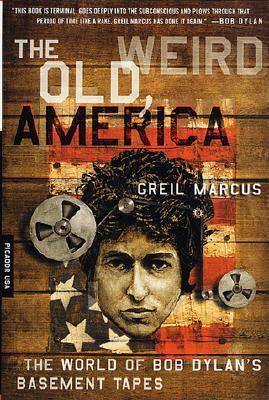
The Old, Weird America: The World of Bob Dylan's Basement Tapes
An admirable facet of Greil Marcus's digressive form of criticism is that he's always attempting--essaying forth, essentially--to demonstrate the unities between the high, low and middle portions of culture, insisting, with an impressive range of references and reading that the separations between are more argumentative than substantial. Linking mountain and southern music with Dadaism and neo-Marxist student rebellions with Religious bliss with rock and roll and performance art--an exciting project to stake one's career on, which is precisely what Marcus has done. Famously, though, Marcus, one of the first rock critics for the Rolling Stone publication, the author is given to digression and historical anecdote, musing and abusing the privilege of making metaphor when proofs of his theory are required. Assuming that he had a theory, to begin with. Marcuse is clearly moving in the dialectical mode, maintaining that opposing forces arise in history that then clash inevitably in the violent synthesis and create a new period of existence with new rules and cultural distinctions, all of that creating it's opposite and which will again clash in violent synthesis. But instead of a theory that one can read and argue with, that is, I suppose, a script one can comprehend and modify as new evidence comes to light, Marcus is more impulsive notion than theoretical rigor. It is the joy of reading him, as he seems to relish the chance to  recreate some blessed moment in music history--the Sex Pistols rehearsing "Johnny B. Goode" (in his book Lipstick Traces)  or the tension on the stage at the Newport Fok Festival when Dylan, assuming the stage with an electric band, was booed and called names by a crowd of stalwart folkies. Just when you think he's ready to provide the skeleton key to his musings, the punchline, the point he's taking a good while to get to, Marcus recedes into the mystify murk of his own grandiloquence. That is the joy and the aggravation of reading this writer.   

I read Greil Marcus because I love the way he writes and admits that his prose has been an influence in the way I take fingertips to the keyboard. This is a problematic love of the man's love that has existed for five decades. Lately, though, it's been more prolix than persuasion, as his ongoing effort to make Bob Dylan the central factor of the 20th century hasn't struck a believable insightful note in decades. The Old Weird America is an extended reflection on the songs that appeared on Dylan's famous 'Basement Tapes", strives to provide the secret history behind the songs. In matters of the cross-pollination of cultures, racial justice, the mashing together of folk authenticity, rock and roll and Symbolist poetry, Marcus essentially argues that all roads lead to Dylan and lead through him as well. As criticism, it is more an act of imagination than a weighing of elements; Well read and as well listened as he is across a great spectrum of literature and music types, what is lacking here are the dual duties of establishing how the songs and artists within the folk tradition influenced Dylan and how Dylan assimilated the music who's expressive brilliance he could never equal and yet was motivated by to create his own means, and create a new criteria by which to discuss the success or failure of the work. Dylan is less the artist to Marcus than a saint or something greater, and, even though there is a pleasure to ride the waves, cadences and well-crafted metaphors and similes of the writer's prose, The Old Weird America is a shaggy dog story at heart. Marcus began this habit of epic digression with Lipstick Traces, a tome not without its pleasures--his connection thereof the efforts of Cabaret Voltaire, the Dadaists, Punk Rock and the Situationist provocations of Guy Debord was especially tightly argued-- but now it seems little else than a practiced spiel that's trotted out and exclaimed, regardless of the topic, not unlike an old timer's AA share that is memorized not just by him or her but by the entire meeting that has heard him or her deliver for decades. What I am saying is that Marcus is writing the same book with diminishing degrees of enthusiasm. His fascination with the idea that there is a Secret History of American culture, where ideas High, Middle and Low meet and create odd examples of genius and odd, clarifying perceptions to the exact set of ironies that both inspire and hobble us as a collective society striving for imperfectly stated Ideals has gone from an intriguing and seductive conceit where equally obsessed readers, hoping there is more to rock and roll and blues and country music than guitar chords and drunken hard times, can share the idea that there is a metaphysical aspect to the lovingly embraced sounds that defined the childhood of millions of citizens. This makes for diffusion of argument on Marcus's case, and leaves us more with bold assertion that is no longer the poetic effusions of a critic inspired toward a degree of inspiring interpretation; this is the point where the eloquence no longer rings, soars or makes you want to turn up the volume and study a lyric sheet while scrutinizing the tunes of Dylan, the Stones or the century's end disruptions of Hip Artists and those after them. 

Rock has its own Harold Bloom, likewise an esteemed critic of literary works who, of late, is an admitted Bardolator who has written a number of books concerning the essential genius of Shakespeare as being something much more vast and profound and, shall we say "world creating" than even the wildest essayists have claimed in the centuries previous. Shakespeare, says Bloom, asserts Bloom, proclaims Bloom, created the Modern World, every inch of it, every concept, every psychological profile and alienated nuance we can think of. You can argue with his sweeping conclusions, but the book I'm thinking of, "Shakespeare and the Invention of the Human" is a critical delight. It may be that Bloom is luxuriating in the laziness of a higher caliber. The difference between them is that Bloom has a thesis that he's worked with for decades, a set of subtle arguments crystallized in his landmark book "The Anxiety of Influence", a brief but trenchant discussion where the Professor posits that Shakespeare is the premier genius who casts a long and permanent shadow  over the rest of world literature that came   before him and that his influence is so pervasive that no poet or other literary artists cannot help but be influenced by him. Those great geniuses who've emerged after Bard's time have either engaged their  influence from him and written great works extending, modifying and altering the system of metaphor Shakespeare changed our collective   consciousness with, or there are other genius who've emerged over the centuries who, being painfully aware of the Bard's embedded influence on how sentences about human experience have come to be written, write    furiously in the other direction, against his style, assumptions and rhetoric, experimenting, taking political risks, deconstructing, inverting, abstracting and de-familiarizing the artful language in  ways only a new kind of   genius would conceive and execute. But here's the rub: even for those great writers who've made great art with language that artfully  contains the human impulse to  go beyond mere descriptions of the world and peer at what is behind the veil of enumerated appearances, Shakespeare is present, his aesthetic, his metaphors, his language influencing new writers in one direction or the other. That is a rather crude summary of Bloom's basic premise and there are dozens of other notions woven through his life's work, but the point is that his a set of ideas that make the ideas tangible and convincing once the initial "aha!"  of flashing insight wears off. It's not science, of course, but it is a craft, a profession, this kind of thinking, and what we have in Bloom who has taken his working theory and tested it against new ideas, new writers who writer literature in cultures other what is routinely aligned in the Western Canon. Bloom, who defends the existence of the canon and wrote a book on the issue, believes dually that there are permanent genius and masterpieces of Western Literature,  as he is a man who has made a career judging books with imposing standards. The standards are not fixed, though, and Bloom further asserts Test the Canon is a living thing, like the   American Constitution, a category of books and authors that must be continually revised as matters with human existence come to mean something different. As I've mentioned already, Marcus hasn't put forth a thesis from which his notions can find a more compelling form of argument, a form that would aid others to avoid the frequent bush and thorny bramble that spreads in Marcus's many books and subject his scheme of rock music's claim to art to some respectful but rigorous interrogation. Marcus and impressionistic hot takes on matters of music, and culture, in general, have been brilliant at times, but the later work is actually regressive and without a central premise or premises. I frankly think he's lost in his thoughts but without a map.

 The point here isn't to go over Bloom's declarations in, say, Shakespeare and the Invention of Human or Hamlet: Endless Poem , but rather to mention that as in the case of Greil Marcus we have a critic who has stared too long at the page, listened too long to the same old songs, two critics fixed on their respective catalog of ideas and conceits who are now not speaking to a readership, or at least no readership other than themselves. A pity, of course, since criticism, as practice, is to assert, offer proof of argument from the text scrutiny, and provoke discussion or at least some element of usefully invigorating intellection. Instead, possibilities are exhausted the critic's terms, not those of the book or the disc; I find that this kills enthusiasm for the art itself. I don't want to think about anything larger than what's for dinner after reading Bloom murmur through layers of verbal phlegm about the Absolute Appetites of Falstaff, nor do I desire to play air guitar or consider the sweet surrealist mannerisms of Tom Waits after Marcus intones multitudes of repetitively presented riffs, paragraph after paragraph. Those familiar with how the author thinks on the page will note, also, the lack of real verve in the writing, skilled and flowing as it may be.

____________________________________
BARRY ALFONSO: I fear this is an accurate reading of Marcus's book (which I have not read, though I've read Mystery Train as well as lots of Marcus in various publications). If The Old Weird America is a fun read in and of itself, well then I really don't care whether he gets his ostensible topic right or not. But I fear that Dylan's Basement Tapes songs -- probably my very favorite batch of tunes in Bob the Bard's catalog -- cannot stand the critical weight Marcus presses down upon them without collapsing into a batch of nonsensical shards. This IS Chicken Town, after all. I don't want Marcus confiscating the lace, if you know what I am sayin', brother.