Showing posts with label BLUES. Show all posts

Tuesday, December 1, 2020

HOLLER, STOMP AND RIFF WITH WAYNE RIKER


Blues Lightning
The Wayne Riker Gathering
The last we beheld guitarist Wayne Riker was on his 2018 release Blues Breakout, a spectacular exhibition of fretboard heroics. Known locally and nationally for  mastery of  a variety styles, the previous album was Riker in a mood to blaze the blues.It was, to my ears, the most impressive display of blues guitar know-how since Johnny Winter's fabled  Second Winter .  Riker is a very distinct, even singular stylist, of course, but what he shares with Winter is an unerring sense of melding technique, taste, flash and feeling into each phrase he puts out there. Wonderfully fluid , he makes it seem that he can make his guitar convey the emotion and attitude he feels the moment he feels it; this disc is the kind of long-form improvisation which renews itself with each chorus. Each solo our friend Wayne essays forth is packed with what might be called The "Wow Factor”.

The new record Blues Lightning  continues this ride, with Riker this time availing himself of another able musicians, a quartet with Riker on guitar, Doug Kvandal on organ, Mackenzie Leighton on bass and Walt Riker on drums. A briefer album Blues Lightning has six hard-sizzling tracks, recorded live on three different dates at San Diego's Studio West. The mood up-tempo, with enough of B.B. King’s feel for elegant hullabaloo. The band throughout demonstrates a flawless sense of what how to play the changes,  with bass and drums locked into a neat habit of propulsion , keeping the music tight while allowing it rock hard . Riker's guitar work is a revelation to anyone who had loved his accelerated dexterity from the 2018 release. This time his breaks are sweet, the phrases more voice-like , with a  very use of seeming obligato statements, superbly use of pauses between riffs, and an emotionally pulverizing feeling for the high blues bend, controlling with a vibrato at the end of the line , compelling your author to slam his hand on the coffee table a few times.  The band mix is spicier with Kvandal's adroit work on the Hammond B-3 organ work, producing swells of funky, grinding texture that weds Riker's spikey guitaring and the rock-solid rhythm section. He fills gaps, offers short phrases to underscore vocal lines, and is a glorious second voice on his own solos, spare, resonant, eternally funky. Guitarist and organist engage in a continuous series of quick- witted dialogues and call -and- response.As mentioned before, the album, this release has only 6 tracks, each of them a glistening gem of finesse and feel. But what brings Blues Lightning even more intoxicating is the are the six powerhouse vocalists, Leonard Patton, Shelle Blue, Deanna Haala, Scott Mathiasen, Lauren Leigh Martin , and  Michelle Lundeen.  Each vocalist applies their potent skills to their respective songs. Every hoop, holler, and belted testament to the ironic ways of life and love, a subtle array of emphasis and insight. It’s a one of the record's added pleasures that listeners get to appreciate the contrasting yet complementary contrasts that makes the music even more electrifying.

We range from the subdued and conversational truth telling of Leonard Patton's reading of the B.B.King classic "Everyday I Have the Blues "(composed by Memphis Slim) ,  a vocal marked both by restraint and conviction in the singing while the band provides a sprite, marauding groove, to the classic blues shouting brought on by Scott Mathiasen on Freddy King's "Tore Down" ( written by Sonny Thompson), a snappy and strutting shuffle highlighting the singer’s grand and soulful rasp over the percolating ensemble. Shelle Blue’s reading of “W-O-M-A-N” ,  composed by Dorothy Hawkins, Abbey Mallory, Jean Mitchell  and Jamesetta Rogers, is a sexy and assertive response to the male-point of view of  “I’m A Man”, reminding everyone in the room that women are full partners in the life they have with their mates.  The B.B. King arrangement of “Rock me Baby” is sufficiently  growled, groaned and soulful as rendered by Deanna Haala’s declarative voice .

 Michele Lundeen’s vocal on the blues -torch song ballad “That’s Why I’m Crying” (composed by Samuel Maghett)  brings a hint of the sassy earnestness of Eartha Kitt to the testifying. Riker’s guitar fills and his solo on this tune, incidentally, are quite thrilling, responding to the highs and lows of Lundeen’s matchless singing.Singer and guitarist create unbearable tension until Riker cuts loose with a bravura solo, eloquent and slashing. The solo is an exquisite showcase of two-fisted blues work, as is , in point of fact, the entirety of Blues Lightning.  Buy the record and do as I do and place the disc on while having your morning coffee. Twenty minutes of that in the A.M. and I am ready to seize the day.


Sunday, January 27, 2019

BLUES THAT MAKE YOU BLUER v BLUES THAT ARE TRUER


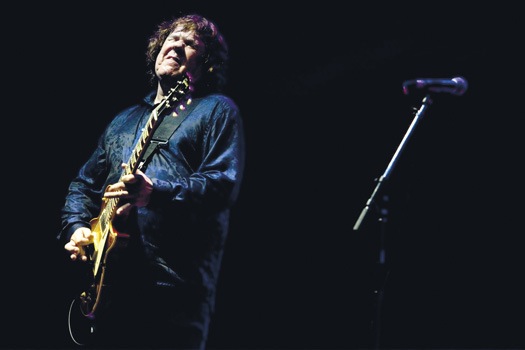
Blues guitarist Joe Bonamassa seems to be the white blues guitar saviour of choice for this part of the 21st century, a situation that has me tipping my hat to his technical acumen, his taste in guitar heroes, and the obvious work he put into his woodshedding to have those fancy chops at his disposal on demand. It's just too bad that all I get when listening intently to his long and frequent solos is the work involved in the effort to get all this text-book perfect. This is superhuman execution without commensurate passion. No fire under all that smoke. At a younger and less discriminating age, I might have been a fan, excited by his melodramatic playing and the authenticity of his rasping growl of a voice. No so much these days, not after a lifetime debating the merits and demerits of Clapton, Winter, SRV and the legions of other guitar heroes that populated the sports arenas off American cities in the 70s, Bonamassa seems no more than the advanced student who's perfected every cliche he could from the generation previously holding court without working on his own style, that rare item called an individual voice. What's the point, I suppose, is the enlightened way to take all this in, or ignore it outright. The last white blues guitar slinger to give me the figurative kick in the head was the late Gary Moore.


Image result for gary moore
Moore was the last of the great ones, I think, less so for the originality of his chops--save for the speed tested relish and elan of his riffing, little in the way of his velocity seemed new. Moore came by his flashiness naturally, as he loved the work of his defacto mentors--B.B., Albert and Freddy King, Buddy Guy, Peter Green, Erick Clapton--that he didn't want to insult what he perceived their greatness to be by merely mastering their licks faithfully, performing them on command with machine-tooled precision. His work sounds like the energy of someone who picked up on the tweaks, twists, and inventions of all his heroes and sought to find his way to play the blues Over the Top. There is a beautiful aggressiveness to his solos, a sublime benevolence to his fastest and flashiest note clusters. His lengthy expositions are not to everyone's taste, and ours is not a time when music fans of a younger generation speak obsessively of guitar heroes as a concern as essential as food, clothing, and shelter, but to the degree to which this musician committed himself to a style and particular approach to that style, Gary Moore's guitaring--to my tastes --was an inexhaustible font of inspired, riffing epiphanies. Moore mattered, or at least impressed the Dickens out of me, because of the obvious glee with which he took command of the blues-rock form. He might not have invented it, but he certainly ownership of it. He knew what to do with the prize he commandeered.

Joe Bonamassa just bores me with all his pro forma shuffles, boogies, rockers, and rave-ups. Slick, well constructed, and stiff as Disney robots. Technique without spirit, that distinguishing attribute that gives mastery of complex concepts a personality that distinguishes it from other virtuosos-in-waiting, isn't art but merely mechanics.


Wednesday, October 10, 2018

TOMAS DONCKER AND THE BLUES OF RIGHT NOW


THE MESS WE MADE -Tomas Doncker 
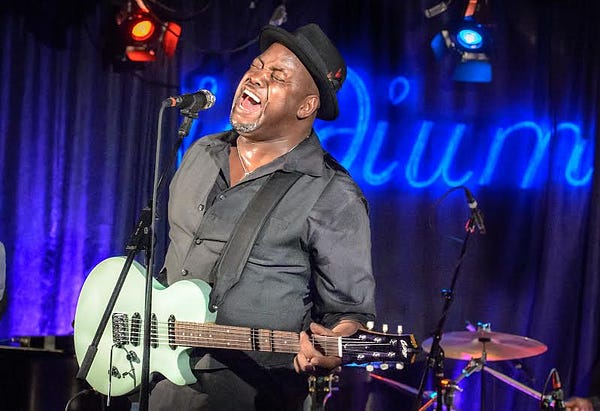
The music called the blues isn’t dead because people still get the blues, a condition that comes from various states of being that are not conducive to broad smiles and sprite pop songs. Racism, sexism, homophobia, poverty, love problems, crime, economic oppression, organic states of mental instability, life seems a punishment to millions, a punishment mostly of our own making, the sad fact of human history that we create our own woes. The truth is about speaking the truth to these matters, testifying from one’s own experience and critiquing the cases and causes of the accumulated woe in terms blunt, specific, unhindered by apologies or finessed blather. Bluesman Tomas Doncker, a veteran guitarist/singer, and songwriter who’s been developed a diversified resume with collaborations with Yoko Ono, Ivan Neville, Bonnie Raitt, Bill Laswell and Pulitzer Prize-winning poet Yusef Komunyakaa, brings us The Mess We Made , a pungent and thrilling diagnosing of the current situation that reminds us, to paraphrase Ezra Pound, that blues is news that stays news. 

The Mess We Made is a contemporary blues album, far beyond the expected twelve and sixteen bar idiom of more traditional form that has become sadly parodied, if unintentionally, but a generation of younger musicians. Doncker has an expansive palate the draws from, generous portions of New Orleans stride, electric-Motown funk ala the Temptations (“Cloud Nine”), the ethereal rhythm and blues musings and murmurings of Curtis Mayfield (“Freddie’s Dead”).
“Church Burning Down”, a hyper funky testimony that features the superb rhythm section cooking on a red-hot foundation for Doncker’s ire, an angry lament that in the face of turmoil, strife, oppression, the cold murder of members of the community, the Church he worships at and the churches of other faiths nominally sharing the same spiritual beliefs and tenets, cannot come together and move their communities toward a common goal of making daily life better, decent.
I am a sinner, just like you
 Abandoned by a state of Grace
 Just like you-just like you
 So damn sick and tired
 Of being sick and tired and abused…
There is conspicuous common cause for religious leaders to live up their professed beliefs and work hard for a better community where neighbors aren’t preying on one another, but human vanity resists the commitment and what results is institutionalized indifference to the problems, an indifference that will result in the church being consumed by the troubles they ignore.
The title song, “The Mess We Made”, reflects on the irony of humans acting increasingly in corrosive bad faith through the kinds of digital aids that have promised consumers the means to connect with hundreds of others, acquire scores of information in an instant and achieve a glimpse of the real world only to find themselves isolated, fearful, angry, paranoid, depressed as a long-term result. Verse three is a sad admission of powerlessness to anyone who harbors aching regrets over ignoring relationships and opportunities in life as it’s actually lived, preferring the illusion of being the center of the universe while in the prison social makes possible.
Should’ve known better
 Should’ve left well enough alone
 Could’ve shook a hand and made a friend
 Should’ve put down my smart phone
 Should’ve known better
 But I was so afraid
 ’Cause I drank the poison sweet Kool-Aid
 And now I’m drowning
 In the mess we made
Bridge:
Get your mind right
 Gotta get your mind right
 Get your mind right now…
The Mess We Made is a confident testimony from one musician and citizen who wants himself to rise above the routine mendacity that depreciates both oppressed and oppressor, but also that insists that we need to free ourselves from our devices, to look up from the monitors and to walk outside to see the world that unveils itself. This not, though, an album of lectures, rants or scorn heaped on you at length. It’s a musically rich field of styles here, extending the blues into the contemporary vernacular but never losing the grit, the grease, the percolating counterpoints and variously rocking counters that make this testament alluring, fascinating, and, yes, danceable. Bear in mind the instrumental chops of the musicians, with Doncker’s guitar work reflecting both the slash and sonic wherewithal of Hendrix and Stevie Ray Vaughn. He has chops, yes, but they are in service to his fine songwriting.