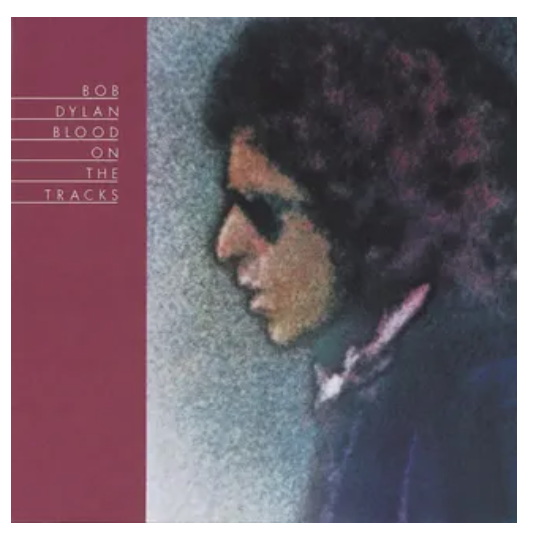
(This originally appeared in a another version in the San Diego Reader, 1975).
In the waning days of 1974, as the hoi polloi queued for Led Zeppelin’s latest eruption of amplified bravado, the rock critics, their brows knitted in a familiar fret, awaited Bob Dylan’s *Blood on the Tracks* with the hushed anticipation of cloistered scholars. The masses could revel in their sonic bacchanals, all sweat and decibels; the critics, those fastidious sentinels of taste, craved something weightier, a voice to parse the nation’s disquiet. Dylan was no mere troubadour—he was a chameleon, a poet of the asphalt and the soul, whose nasal hymns had once seemed to reorder the stars. His pronouncements demanded attention; symposia were convened, pens poised for annotation. Perhaps this exaggerates the fervor, but for years, the press had swaddled him in a cocoon of expectation, their adulation both tribute and burden. Now, rumor held that *Blood* was his homecoming, a retreat from the facile mysticism and barroom bonhomie of recent years. I settled into my chair, skeptical, curious for the inevitable sleight of hand. The critics, it appeared, had already uncorked their champagne.
*Blood on the Tracks* is Dylan as his acolytes remember him: the harmonica’s thin, asthmatic wail, like a wind skittering through a deserted alley; a voice that stumbles and gasps, tethered to no rhythm save its own caprice; lyrics that cascade in a torrent of images, defying meter yet thick with private meaning. It is the Dylan of yore, the Greenwich Village bard reborn, and the critics greeted him with open arms. The counter culture's tip sheet *Rolling Stone*, in high ceremony, banished its usual reviews to make room for a pair of ponderous essays—Jonathan Cott and Jon Landau, high priests of the moment, flanked by a chorus of eminent voices, with only Dave Marsh’s dissent piercing the hosannas. The verdict was near-unanimous: a triumph, a poet’s return, a tapestry of genius. Familiar praises, repolished to a gleam. Yet what unsettles is the ardor itself, a kind of collective yearning. From my modest perch in Clairemont, far from San Francisco’s bohemian haze—where rock stars seem to embody the fan’s unspoken longings—*Blood* feels less like a revelation than a simulacrum, a deftly crafted echo of a voice grown faint. Dylan sounds detached, a performer playing himself for an audience he no longer trusts. It is as if, wearied by the chase, he has lain down in the snow, offering his bones to the circling pack. The image is not a kind one.
Once, I too fell under Dylan’s spell. In the acne-scarred fervor of junior high, his sneer was a talisman, his mystique a lantern in the suburban dusk. He was untouchable—defiant, electric, a man who spurned the world’s judgment with a curl of his lip. His life was a mosaic of excess: the endless road, glimpsed in the flickering frames of D.A. Pennebaker’s grainy verite *Don’t Look Back*; the rumored pharmacopoeia—amphetamines, perhaps heroin, a brush with acid; whispers of liaisons with Allen Ginsberg, apocryphal or not, that lent him the sheen of a Byronic rogue. He was a poet of America’s underbelly, his songs spilling forth like dispatches from a frontier aflame. *Highway 61 Revisited*, *Bringing It All Back Home*, *Blonde on Blonde*—these were his gospel, a sound sui generis, jagged and alive. His early folk forays were a young man’s masquerade, aping the ghosts of blues and hillbilly bards; what followed *Blonde* was a retreat into domesticity, a softening that drained his fire. *John Wesley Harding* offered glimmers—parables refracted through a biblical lens—but it lacked urgency. *Nashville Skyline*? A friend, now estranged, once claimed it taught him “rednecks are human too.” I swallowed a grimace.
To hear *Blood on the Tracks* is to confront the ghost of the Dylan devotee. In 1966-67, he was our mirror, our savior, singing for the awkward, the inward, the boys scribbling verse in lamplit bedrooms, haunted by the draft and the weight of their own inertia. Life was a cocktail of dread and ennui, the suburbs a velvet cage. Dylan’s tangled curls, his reedy defiance, his “go to hell” lyrics—they were a dream of escape, a way to defy the cul-de-sacs without stepping beyond the lawn. He carried our burdens, a scapegoat for a generation too cosseted to follow Kerouac’s dusty road. Time dulled that enchantment. I turned to rawer sounds—Grand Funk’s blunt force over the Moody Blues’ ethereal drift—seeking not insight but obliteration. Dylan, stung by the tepid sales of *Planet Waves* and *Before the Flood*, chose to appease his flock. *Blood* is the result, but it is a warped mirror, reflecting a past that no longer breathes.
If *Blood* is a feint, it is also a confession. Dylan abandoned his speed-freak persona for survival’s sake—such fires consume their keepers. To demand that old ferocity is to court a corpse. Recapturing *Highway 61* is like bottling a storm. So, with coffee cooling and cigarette ash lengthening, I watch the record turn. “You’re Gonna Make Me Lonesome” begins—Dylan’s voice nasal, laced with a theatrical sincerity, as if Elvis were crooning for a supper club. The guitars plod, the harmonica sputters like a failing engine, a nod to Gerdes Folk City for those who missed the myth’s first act. He veers off-pitch, scatters references to Rimbaud and Delacroix, teasing the annotators. Who is this for? “Tangled Up in Blue” fares better, its voice truer, but it lacks revelation. “Simple Twist of Fate” stumbles. “Lily, Rosemary and the Jack of Hearts” reaches for *Highway 61*’s surreal shimmer but collapses into cliché, a tale told too often. The platitudes gather like dust, stifling the air. My cigarette burns to its nub; I resist the urge to halt the needle. This is a bitter pill from a man who once seemed to hold the cosmos in his throat. Yet I gleaned my Dylan truths long ago—I should not mourn. New voices beckon: Little Feat’s earthy pulse, Roxy Music’s urbane glitter, Harvey Mandel’s sinuous lines, perhaps Queen’s baroque audacity. The band lumbers on, Dylan mimicking himself with a faint, knowing smile, as if he sees through his own charade. The parade has passed, its banners faded. The record ends, the arm lifts. I turn on the radio, and Led Zeppelin’s primal wail floods the room—a coarser, truer song.
Where are you now, Jake...and where are my bitcoins?
•
Barry Alfonso
In Santee, "drying the cat by hand" means taking a single woman out to dinner, saying flattering things to her, picking up the check and then giving her the phone number of your brother-in-law, I understand.
Ted Burke
It has been said that "drying the cat" means mispronouncing the names of jazz musicians like Theolonious Monk and Ornette Coleman in an Telegraph Avenue methadone clinic. "Drying the Cat By Hand" is a variation heard in the Tenderloin and up to North Beach, meaning that you announce to Amiri Baraka that Boots Randolph played better sax than Coltrane or Shorter.
Barry Alfonso
I've also heard that it is a derivation of the old blues expression "shave 'em dry," meaning to cut off the head of a glass of beer with a straight razor before attacking someone in the solar plexus over a Stetson hat.
Ted Burke
I've heard tell of that as well and it makes me wonder if that is related to the practice of ordering a shot and beer and dry towel twisted into a rat tail and snapped cruelly to the back of the drinker's bare neck by everyone in the bar named either "Earl" or "Ondine".
Barry Alfonso
A lot of this has been lost and confused over the years, I suspect -- a "dry cat" used to be slang for a guy with a flat top and bad dandruff. It was a custom to rub scalps like that for luck before a dice game or before rubbing spices into a jerk chic…
See more
Ted Burke
There was the habit among dairy farmers of rubbing their bovines with mewing kittens for no real reason; "drying the cow" became "drying the cat" over time, an understandable conflation, and the implication of the phrase is that one is standing around irritating another living creature for no good reason. But since when does anyone need a good reason to irritate someone?
Barry Alfonso
That's right! Now I remember. Will Rogers did a bit about this and in fact got arrested in Tulsa for demonstrating how it was done. There's a famous photo of Junior Samples from Hee Haw "drying the cat by hand" behind Stringbean's back when he thought the cameras were off.
Ted Burke
*Absolutely! This in turn inspired Pynchon's famous opening line of his magnum opus 'The Crying of Litter Box 29". "A dry cat came screamng across the sky..."
Barry Alfonso
Right, that was a literary in-joke for many years standing. Hemingway took a swing at Frank Yerby after he wrote that Papa had been drying the cat with both hands for years...
Ted Burke
On a related note, Norman Mailer misunderstood Russell Kirk when he announced that what really wanted was a "cat dried by hand". Mailer took this to be a translation of Parsian street slang used among working girls meaning that the person who uttered the phrase was in desperate need of being buggered, but that lacked the needed ticket for admission.Mailer told Kirk that he had his ticket "right here" and demanded Kirk "give up the cat." William Buckley was amused by the whole thing and had Mailer on his tv show several times.
Barry Alfonso
Well, I do remember Gore Vidal giving Buckley the hairy eyeball on TV during the '68 Democratic convention and saying, "You really are drying the cat by hand a little hard tonight, old boy" while Buckley let something moist and shiny collect above his upper lip.
Iggy Pop was a drummer in blues bands before he and his fellows formed the Stooges in the 60s, and as this song demonstrates, the experience wasn't wasted. Iggy and his mates understood, that is to say, felt the vaguely described but conspicuous force that blues had, simple, sonic, repetitive and impolite to any standard measure of tempo. This was the kind of music that was the blend of instinct and wits, a boxer's set of reflexes to things that get in your way. Guitar, drums and are a distorted grind and the tempo of nails hammered.
The Ashtons smashed mightily. Iggy, of course, was the man alone, a three-semester course of unreconstructed Id that inhabiting the center of every ganglion of nerves the brain tried to lay claim to; the superego to twitch and become more reptilian by the second. He was that kid in drainpipe jeans who carried a sharp stick with a brown, mung encrusted nail through it, waiting on the corner for someone as yet unknown to walk by and get poked with it. There was no fun, so you made your own, just to see what happens. These were Mailer's White Negros for a fact, except they shivved me a man who was tailing them and talking too much in the other muse mute streets of two-story burn pads and deserted storefronts that had their front windows sealed with concrete and layers of old concert posters and spray paint exclaiming gang signs and Jesus. Anyone daring to talk past this kid deserved to be whacked with the rusty nail. It was cruel and pointless until something genuine happened to change everything; the bit that everyone knows in the world of the Stooges is that transcendence is not on the agenda, ever.
No band embraced nihilism with more profound off-handedness than The Stooges. Part of their genius lies in t their lyrics, hardly cliché but not conventionally poetic, these were rhymes that were spare and simple, and powerfully to the point, talking about the small matters of frustration that send the young mind into paroxysms of rage and self-recrimination. Ever say something or overheard a phrase from someone else uttered in exasperation or another kind of brain locking state where what is said is so starkly simple and clear and unadorned by apology or other sorts of mental equivocation that it resembles brilliance? That’s my take on the collective lyrics of the Stooges, words as an instinctive reflex, Nor was their music dependent on the trivial concern of instrumental virtuosity.
This was the sticking point with many critics at the time when their first album, The Stooges, was released in 1969. In a counter-culture that was ironically putting premiums on the extreme professionalism of well-trained musicians who could hit notes precisely and improvise at length over increasingly tricky time signatures, the Stooges were the textbook example of the anathema, an insult to the taste-maker elite. Reviews were generally insulting to the band’s repetitive slam and clang approach, and it is one of the wonders of staying alive long enough to see a groundbreaking band, unfiltered from the start, outlast the negativity and change the critical consensus. The intelligentsia had to catch up with them. The Stooges rejected formal instruction on their musicianship and, in turn, weren’t about to suffer the instructions the snoots and snobs demanded they follow.
What’s ironic is that Rolling Stone, the arbiter of quality in matters of the New Rock, still had integrity in their record reviews at the time and allowed one of their original rock critics, Ed Ward, to let the air out of the inflated importance of over-serious rock music and the earnest critiques they inspired by his review of the album. The first two paragraphs have Ward offering a thumbnail sketch of the band’s background, quickly followed the expected litany of sins, that Iggy is a bad Jim Morrison imitator, the lyrics are sub-literate, the guitar and drum work is lifeless and lacking even the dignity of being mechanical. The something wonderful happened halfway through. He summarized his feelings thusly “Their music is loud, boring, tasteless, unimaginative and childish.” Then something remarkable happened.
With the grievances listed, and the verdict delivered,Ward added, in a single sentence, standing alone , unencumbered by other sentences, “I kind of like it”, Ward performed an endearing bit of proto-deconstruction, using the aforementioned deficiencies in the music as examples of virtue, value, honesty, artistic vision. It was one of the great pieces of rock criticism because here Ward created the basis of real aesthetic argument that maintained, essentially, that the Stooges were the true face and sound of a rock and roll that was relevant to life as it was being lived by millions, a voice, sound, and poetry from the curb, alley and shuttered doorway that wanted nothing to do with millionaire musicians with long hair striving to achieve legitimacy by mimicking and misreading the most superficial elements of High Culture. Ed Ward established the concerns that Lester Bangs soon picked up and turned into a masterful argument with the dying of the light. We can thank Ed Ward and the Stooges for that relief.
This was a band that went in the other direction when they began their quest to find what lay beyond avant-garde posturing in Music during the 60s away from trudging drum solos and long-form guitar essays. Iggy and the Stooges were primitive, out of tune, irritated and irritating in turn. It was a matter where the band and their frontman, Iggy Pop (nee Stooge) blended perfectly, given their ability to turn something that sounds horrible and repetitive into a crashing, sustained drone of attitude, and Iggy's serpentine stage presence and clipped verbal dexterity. He was the guy who couldn't sit stand and would stand for nothing less than what he wanted in full, and they were the grind of the city turned into a droning inner voice prodding him to smash down whatever walls came before him. It wasn’t that he was a bad boy going contrarily to the niceties of all things middle class and calcified, it wasn’t that he as a sentient being had identified an artifice he disliked and defined himself in opposition to it; it was more like Iggy Stooge was unaware of the feelings of others, greater ramifications of dangerous self-gratification, or any code of behavior the rest of us depend on keep drivers and pedestrians, for example, on the streets and the sidewalks, respectively. He was the unadulterated id, a squirming mass of impulse that transgressed boundaries, mashed together poetry and porn, and displayed no interest in theorizing about what he had done or about what he was thinking of doing. His was the case of living in the present tense solely, and whatever sensation presently was utmost.
Let us not be mistaken about this, as Iggy Stooge’s persona and psyche had the virtue of being monochromatic; his immediate impulse was not the only thing that mattered. There simply wasn’t anything else. All this play against the quarrelsome insomniac raunch of Ron Ashton’s guitar work, elementary, rudimentary, undeniable effective, endlessly influential. What he lacked in technique he made up for in essence, a counterpoint to the corrosive thrills of Iggy’s distilled juvenile delinquency; his guitar work might be politely described as “steady”, but this a dodge against the annoyance factor this band turned into a new aesthetic. “Persistent” is more apt, like a dislodged bit of a fender dragging along the highway, kicking up sparks near the gas tank, or a door slamming for hours in a strong wind, or jackhammers at night carving up your street at precisely the moment your brain demands you sleep or die inanely. Obnoxious, profound without knowing. We should all be grateful these guys wielded musical instruments, not guns. Or worse.
This is a dialogue between writer Barry Alfonso and me regarding the song 'American Tune" by Paul Simon from his 1973 album There Goes Rhymin' Simon. The chat was published in The San Diego Troubadour , keenly edited by good friend Liz Abbott, the best friend a music scene could have. Barry begins introduces the conversation with some concise and salient background, and then off we go.-TB)
Last year marked the 50th anniversary of the release of Paul
Simon’s There Goes Rhymin’ Simon, a mostly good-humored LP that contrasted with
the often-melancholy tone of the singer-songwriter’s earlier work with Art
Garfunkel. The exception to Rhymin’ Simon’s sunniness was “American Tune” an
elegy for lost dreams set to a Bach chorale that overshadowed everything else
on the album. I can remember the impact of the song on me as a teenager. And I
remember also the reaction I had to reading a review of Rhymin’ Simon that
appeared in the July 12, 1973 edition of the San Diego Reader, written by a
cogent, sharp-elbowed critic named Ted Burke. Burke dismissed much of the album
as “diffuse, distracted,” the work of an artist “mumbling to himself.” Ouch!
However, Ted pronounced “American Tune” brilliant—and it was and still is.
Remarkably, it has endured in popularity and significance, transcending its
immediate relevance to the loss of 1960s’ idealism to be revived again and
again to mark the national heartaches of the moment. Simon went on to write
other outstanding songs, of course – and both of us went on to become friends
at college and remain enduring partners in aesthetic crime ever since.
Recently, we got together at a coffee spot on 30th Street in South Park to
trade thoughts about “American Tune,” Paul Simon, and related matters in true
rock critic codger fashion, still contentious after all these years…
Barry Alfonso: When I read your Rhymin’ Simon review, Ted, I
took criticism of Paul Simon very personally. I was like those intensely loyal
Taylor Swift fans are today. I identified with his work, maybe a little too
much. I wonder what your attitude about that album is now. Looking back over
what you wrote 50 years later, do you think this is still a fair review?
Ted Burke: There’s nothing like 20/20 hindsight, which means
I would have written a less severe review. In the ’70s I had the unfortunate
habit of reviewing albums by favorite artists that didn’t rise to my standard
as a personal betrayal, a conscious act of bad faith. Over time, post review, I
had to admit that all of Simon’s skills as a songwriter were present throughout
the disc, although I think that my original opinion was on target, that it was
an honest attempt in song to venture beyond the elegantly constructed tunes
regarding loneliness and encroaching despair. Lyrically, the stuff that was at
the expressive heart of Simon’s oeuvre was weak tea for the most part. I think
it’s the honest effort of a gifted writer trying new things, new voices.
Barry: You had some good things to say about his song
“Kodachrome” in there. Do you like the line, “Everything looks worse and black
and white?” He’s right about that.
Ted: It’s a great song and one that works in that it’s an
effectively whimsical reminiscence of his days in high school. In a way you can
say that it’s one of the first times Simon has expressed disappointment with
the adulthood he’s grown into. The line that “everything looks better in black
and white” is revealing in that the tune uses a Kodachrome camera as a device
through which to wax poetic about a simpler time, with the suggestion that his
picture taking captures a world he knows is disappearing with time and
maturity. “Everything looks better in black and white” comes across as a sigh,
a soft admission that despite glaring color of the pictures he snapped of the
things he remembers, his thinking about them is literally black and white; life
was fun and simple and full of adventure and then suddenly it became hard, full
of jobs, families, debt, responsibilities, and the pains of aging. Simon does
the cool trick of slipping in a subtle admission, a confession maybe, that the
way his narrator is regarding his past is idyllic and untrustworthy, even to
himself. This foreshadows what I consider Rhymin Simon’s best song a
masterpiece, I think, which is “American Tune.”
When I first heard the song, I thought the melody was
gorgeous, moody, and reflective in elegant movements that were unusual even in
Simon’s strongest songwriting. He was a superb creator of folk-informed melodic
structures, and he was quite good at incorporating different music styles
seamlessly: New Orleans sounds, reggae, a whole slew of Latin influences. Think
what you will of the cultural styles he borrowed from; he used them
wonderfully. But “American Tune” had a more architectural structure; it was subtler
and had a haunting emotional power to it. It fit the lyrics, which themselves
were something different for Simon, a deeper dive into a theme. Johann Sebastian Bach
Barry: Did you know at the time that it was a Bach chorale?
It wasn’t the first time that lyrics were set to this piece of music. In 1948,
Tom Glazer used it as the setting for “Because All Men Are Brothers,” a
workers’ anthem later recorded by Peter, Paul, and Mary. It is stirring in a
different way than “American Tune” is.
Ted: I never realized that Simon had borrowed the music from
Bach until I heard it on the classical station we play inside the bookstore
where I work. That was a small but important revelation, and I could very well
imagine how Bach’s doleful composition might have inspired Simon to write the
lyrics in the tone and gravity he did. It might well have been the thing that
gave him the stimulation to express some long-gestating notions that he until
then couldn’t quite find the rhyme or reason for. This is rare and the melody
inspired the tone of the lyrics, which was a mixture of nostalgia,
disappointment, and melancholy, but it was always sort of softly played, and
everything was still hopeful. You know, kind of like “I wanna go where all the
good people go to sleep and wake up tomorrow, because tomorrow is another day.”
His genius as a lyricist is heard in the unexpected and
amazing leaps in the narrative line. In “American Tune,” this happens after the
narrator fatalistically ruminates over living in a world that has lost its
promise and purpose, where he goes on to the middle portion, where he dreams
that he’s flying and down below him is the Statue of Liberty. I found myself
beginning to have a visceral response to those lines, making me reflect upon my
own sense of the inability of us to do better. We know better, but we do not do
better. And yet this still goes on. And we have the money, we have the
technology, we have the means to make this all better for everybody. But we
don’t. Everything is piecemeal, everything is spare change, everything is
compromised. What you have in terms of gathering your own strength is
remembering your disappointments and trying to remember your dreams. And the
dreams say you push out, you know, some faith that something better will come.
I mean, for me, that was like thinking of Sam Cooke’s “A Change Is Gonna Come.”
In the Cooke song, the singer speaks of brutality,
hardships, and repression, a seemingly systematic discrimination intended to
confine black Americans to the margins of society. But the song is about a
tradition of faith, powered by the gospel of uplift that comes from the African
American Church. The singer admits the hardship inflicted upon Black Americans
and yet declares that he knows that things will change, that the Promised Land
Dr. King spoke of exists in the hearts of all Americans, and that black
Americans will have a seat at the big table. There’s a strong faith that this
America does exist, or that it can still come into being if the lot of us put
our shoulders to the wheel and move the country in the direction it needs to
travel. It’s a prayer, really, for our country to transcend its worst traits
and embrace a brotherhood and sisterhood of citizens that’s stronger for its
diversity. Sam Cook’s performance lays out the tragedy of the black experience
evocatively and yet is optimistic, hopeful in ways only the oppressed can be in
times when faith is all there is to get you through the day and the days ahead.
“American Tune” as well talks about life in a country where
the promises of freedom, opportunity, and a harmonious life are severely
lacking. But Simon’s song is downbeat, sad, and bitter and melancholic in the
face of the chance that the America we’ve dreamed of living in is gone forever
or that it never existed at all.
I think the song works because of its brevity. I think it
works because of the melody. I like the fact that he manages to step away from
this position of a poet and developed another voice like somebody’s talking,
you know, in words, which are festooned with literary analogies. I really don’t
like most of the work he did with Simon and Garfunkel. His songs back then
seemed to say, “This is what I think poetry sounds like.” I’m thinking of
“April, Come She Will”: “I heard cathedral bells tripping down the alleyways”
or “The Sounds of Silence”: “the words of the prophets are written on the
subway walls…” You know, I was gonna bring something up about the movie we
walked out of years ago…
Barry: Yeah, it was from The English Patient: “The heart is
the organ of fire.” You reacted to a spring in the theater seat that had
stabbed you in the butt!
One thing that still strikes me about “American Tune” is
that it is an elegy for something that is gone. And I can’t think of any hit
song from the rock era that expressed something like that. The closest thing I
came up with, one that is very different but linked with the same era, is
“Abraham, Martin and John,” which has a little hope in it. But the last verse
of that makes you want to cry because it adds Robert Kennedy to the list. It’s
a public elegy for something that’s been lost and that’s what “American Tune”
is. It’s almost unprecedented that something like that would get the exposure
that it did. Can you think of something comparable?
Ted: I would say that would be “American Pie.” That song is
a little more ambiguous, but yes, I see the comparison. What those two songs
[“Abraham, Martin and John” and “American Pie”] have in common is the
purposeful name dropping, actual names and obvious references to historical
analogues. That’s why I like Simon’s song. I think he transcends them all
because he’s speaking generally. I think he’s speaking across generations,
whereas “Abraham, Martin and John” has lost much of its power of expressing a
collective desire to make a better world. Message songs that invoke specific
names and events don’t often occur to listeners when they regard the music of
Dylan or Phil Ochs; specificity isn’t an element that travels much beyond the
history books, but it’s the more generalized work, the lyrics leaning toward
more poetic and elusive atmosphere are the ones that are remembered. Dylan
famously accused Phil Ochs of just being a journalist, not a songwriter at the
time when Ochs was still writing protest songs and Dylan started his
experiments with surrealistic scenarios. Dylan was being a jerk, I guess, but
he was right in the sense that audiences seeking something to listen to and
help them create a sense of themselves in the world desire poetry, not
editorials. It might sound cynical, but Dion’s song is nearly nostalgia, an
Edenic daydream, right up there with “Get Together” by the Youngbloods.
Barry: As I recall, “Abraham, Martin and John” meant a lot
to people at the time. Listening to it was participating in an act of public
mourning. I don’t know precisely what Simon’s motives were, but I suspect that
it came out of his experience with the McGovern for president campaign. We saw
Richard Nixon, the embodiment of all these terrible things, being reelected in
the landslide. And Simon got back together with Garfunkel, whom he had rather
bitterly broken up with to do a benefit for McGovern. He was all in for
McGovern and watched him get wiped out in November of ’72. 1973 really felt
like that was the end of the ’60s. And so “American Tune” came out in May of
’73 and it sounded like an elegy for everything that went before. I think that
Simon had a stake in it personally. When I hear him singing about the dreams
being shattered and driven to their knees, he’s not just talking about the
workaday world, he’s talking about these bigger things that Americans just
didn’t seem to live up to.
The thing that gets me and got me wanting to talk to you
about “American Tune” is how it keeps being revived, because it always seems
relevant to certain moments of national disappointment and tragedy. It was
written in reaction to specific events, yet it keeps being recorded and people
keep getting meaning out of it. It’s 50 years later, and it’s like time hasn’t
moved on. All the things that he’s addressing in that song are still relevant.
Ted: A real generation spans 30 years, the years from youth
to adulthood and between the time that young people become adults. they have
families and eventually become grandparents. Generations that came after the
Boomers, you and I had our own sense of disparity between the promises of hard
work and advancement and the collectively felt experience. We look for heroes
to help us come to terms with that.
When you’re a hero, you’re supposed to become the person
everybody thinks you should be. I remember A.J. Weberman, the self-described
“Dylanologist” who would go through Bob Dylan’s garbage and claimed that he had
created a new science or sociology, all of which was based on his conviction
that Bob Dylan wasn’t just a songwriter and poet but also a seer, a philosopher
and prophet of things to come. I remember reading, with interest, a
self-published squib he produced where there was a lot of tea leaf reading and
how particular lines of Dylan songs forecast grave, epochal disruptions. The
obsession with Dylan, the cottage industry of producing books about Dylan,
biographies, interpretations, and all these other gratuitous additions to the
prose committed to that, that this songwriter was disrespectful to the artist
himself, because Dylan wanted to be left alone…
Barry: How would this relate to Paul Simon? It’s
interesting; Simon is not somebody where people go through his garbage for
clues about how he thinks. He came out of a somewhat of a workaday, songwriting
world. He’d been a momentary teenage rock star with “Hey Schoolgirl.” He was
friends with Carole King and could have been a Brill Building tunesmith. Then,
he went to went to England and became a folk singer. But he’s not a Bob
Dylan-like figure. He is not regarded as a cultural leader in that respect. So,
would it take someone like that to produce a song like “American Tune”? I mean,
isn’t it interesting that Simon would be the one to write a song like that?
Simon is not the kind of person that people were always over-analyzing and
going through his trash for clues about how he lives.
Ted: The difference is that Paul Simon is a professional
songwriter. He sits down and he has a topic and he’s going to write about it.
And he’s going to write a melody, he’s going to write lyrics, and I’m sure he’s
also somebody who looks at what he’s written and edits things out.
Barry: Well, here’s something else, too. In a way “American
Tune” relates to the other songs on There Goes Rhymin’ Simon, the ones that you
don’t care for. Simon might be saying, “Why am I writing all these lightweight
songs about looking back at high school and here’s a lullaby for my young son
and all these other light, fluffy songs? It’s because ‘American Tune’ is so
heavy and it’s so much a meditation how things are now that I’ve got to write
these other light songs to be alive and to be in this world.” The comparative
lack of lyrical depth in songs like “Was a Sunny Day” or “St. Judy’s Comet” is
a reaction to the depressing spirit of the times, just as—in a different
way—“American Tune” is.
Ted: Simon was also under pressure to produce a hit album.
Barry: His first post-Garfunkel solo album was successful
but not a huge hit. [It reached Number 32 on the Billboard Album Chart.]
Ted: I think his solo career is nearly flawless in terms of
albums. And in terms of Rhymin’ Simon, of the albums he’s put out that I’ve
listened to, it’s the one I care for the least.
Barry: In a way, “Loves Me Like a Rock” fuses the lighter
sensibility of the album with Simon’s more thoughtful side. In it, Simon is
saying, “If I was the president / The minute the Congress called my name/ I’d
say, ‘now who you were fooling?’ / I got the presidential seal…,’” in other
words, fuck off and get out of my face. It’s Richard Nixon razzing his enemies
and the American people set to a gospel tune. He’s talking about the current
situation with Nixon and the Watergate investigations, and he’s sort of riffing
on the mood of the moment. It’s a fusion of the two sensibilities in an odd
way.
Ted: Well, the thing I also liked about Simon was his
ability to look at his own image as a sad man just out of a relationship or
overwhelmed with tragic nostalgia. Or he’s writing about something more
ethereal. And you know, he does something like “50 Ways to Leave your Lover,”
which just starts off like another sad Paul Simon song. And then, he says, “get
on the bus, Gus….” That’s a nice touch that indicates he is self-aware of his
image as a writer of melancholic songs. He’s a man who notices when there’s too
much air in his tires.
Barry: Yeah, I think he generally shows a lot of good taste,
sometimes maybe too much good taste, but I would agree.
Ted: I thought Graceland was Simon’s best record. It
probably is one of the masterpieces of its time. “The Boy in the Bubble” has
one of my favorite lines of all time—after all these surreal imageries and all
these references to technology and media and the Age of Miracle and Wonder, he
says, “This is the long distance call.” Yeah, it’s such a throwaway line, but
it’s beautiful.
Barry: No, it’s great. He could go widescreen when he wanted
to, quite successfully. So, ultimately, what do you think people still get from
“American Tune” when they hear it now?
Ted: I think people are nostalgic. And there’s always this
useful past that they long for. I think most people I know—eventually everybody
talks about the old days and just things just aren’t the way they used to be,
or the way they should be.
Barry: … “and everything looks worse in black and white.”
Ted: What do people still relate to in “American Tune”? I
remember having conversations, many of them, with my friends and classmates in
the late sixties and seventies that, as high schoolers, our generation was
smarter, more enlightened, that we were hopeful and had a moral compass that
would change the culture, end racism and war, and undo the evils of capitalism.
I remember reading The Greening of America by Charles Reich, wherein a lapsed
academic prophesied an Eden on Earth because the younger generation would make
the world irrefutably fairer and better in every regard. It was a real head
trip and likely made some of the crowd I ran with a might smug and maybe even a
bit delusional about what they thought they deserved. I had heady expectations,
and there were no shortage of writers, activists, and media sorts reinforcing
the idea that the Youthquake, as many called it, would tip the scales toward
Heaven. And we were enlightened by many different sources: the hippies, early
formations of New Age ideas, civil rights, politics, religious ideas because
we’re an enlightened species, but also an awful lot of us at the time were in
school and had a lot of leisure time; we didn’t have a lot of adult
responsibilities. I’m speaking for many of us, not all of us, but the magazines
reinforced that we can just keep doing all this stuff. We can just do it ad
infinitum; this will never end and we’ll just get better and better, but it
never did, because we became adults. People started having children, so they
had to get jobs and pay mortgages. They had to pay income taxes and they had to
accept that. I think a lot of people miss the days when they didn’t have many
responsibilities.
Barry: You think all of that is in “American Tune”?
Ted: It’s implied. Simon’s narrator in the tune has equal
measures of ennui, depression, melancholy, and disappointment. This works as a
soliloquy of someone in the second half of life. It’s poetic, reflective, and
woeful, a recollection of experiences that have brought us no closer to Heaven.
We kind of see that in more recent history with the Slacker attitude or in the
glorified hype about “Silent quitting,” of doing only the bare minimum required
at a job because it’s a deadening, heartless routine. It’s interesting to
contrast this with “A Change Is Gonna Come,” where the singer and the audience
share the hard and bitter history of oppression, violence, and discrimination
as Black Americans, yet they still get out of bed with the conviction that
despite it all they will work even harder for the better world they believe in.
The sad fact of the matter is that the generation Simon sings of in “American
Tune” sounds like they miss the days when their job wasn’t to pay the rent.
They, we, didn’t expect to be breadwinners and now we’re saddled with all this
stuff. Well, what have we become? Have you become your parents? Yeah, you’re
supposed to be the adult now.
Barry: Maybe that is the true source of weariness and
resignation in “American Tune,” the realization that it is time to grow up!
It’s worth noting that sometime recently Simon rewrote some
of the key lines in “American Tune” to reflect a wider historical
understanding. He changed “We come on a ship they call the Mayflower / we come
on a ship that sailed the moon” to “We didn’t come here on the Mayflower / We
came on a ship in a blood red moon.” Rhiannon Giddens sang those new lyrics at
the 2022 Newport Folk Festival with Simon backing her up on guitar. This
reference to the horrors of slavery and the middle passage changes the whole meaning
of the song. Was the poison in the American apple from the very beginning? It’s
not that the apple went rotten. The poison was in there all along.
Ted: It’s probably the one time I can think of where a
revision helps the song in terms of making it even more timeless.
Barry: Yeah, because the song could always be accused
of—well, this is the evil of the privileged life. They are the regrets of
people that he met at the McGovern cocktail party. Rich liberal angst.
Ted: Yeah, your memories, your own nostalgia, your despair,
your anger over the way things turned out are products of a privileged set of
expectations. As opposed to the “blood red moon” line, which I think just
broadens the spectrum.
Barry: I don’t think there’s a neat resolution to what Simon
is dealing with in “American Tune.” Earlier, you talked about how the song is
capacious enough to hold your own interpretations of its imagery. There is the
image of the Statue of Liberty, smiling at you as you’re sailing away to sea.
What does that really mean? It’s in a dream. And it’s very ambiguous. You can
read a lot into that. Does it mean that you’re protected? Does that mean she’s
waving bye-bye, and her protection has been lifted? It’s not clear what that
means.
Ted: Yeah. I like the mystery, the unexplained intrusion of
the dream into this dour ode. Although it defies sequential logic, the stanza
intensifies the felt melancholy and avoids the overly dramatic. Simon—artist
and craftsman that he is—knew when to leave it alone and allow the words to
resonate as they would.
Barry: Speaking of being hip, Paul Simon was never
considered the hippest songwriter. And yet a song like “American Tune” can
endure and be meaningful to people for 50 years.
Ted: His best work, the major portion of his output, began
with the release of Simon and Garfunkel’s Bookends album. Simon developed his
ear for speech and stopped straining to be poetic and ceased his attempts to
make big statements about the human condition. His best songs resonate because
Simon wrote credibly, in clear and freshly uncluttered language. You can note
his increasing sense of irony, of taking himself less seriously, in expressing
relatable experiences in concise, coherent, and pithy ways that were filled
with all kinds of melodic hooks, segues, and choruses. Whatever one has to say
about Simon, his songs have stood the test of time. I think he’s good because
the songs are good. Once he got out of the Simon and Garfunkel cage, as he was
starting work on Bookends, he attained the particular genius we know him for.
Barry: He would say that a lot of those songs on side two
(“Fakin’ It,” “Hazy Shade of Winter,” and “At the Zoo”) were failed singles. He
was not particularly proud of those songs and wouldn’t perform them live. That
was his take on it.
Ted: The album had some psychedelic Sergeant Pepper-ish
stuff for certain elements of the crowd, but besides that I thought it was a
very strong album. In the song “America,” it’s become cliché “to look for
America.” But I thought the song was just beautifully constructed.
Barry: The language is very visual, like a movie: “and the
moon rose over an open field.” It just sounds good. It’s a wonderful use of
words.
Ted: “It took me four days to hitchhike from Saginaw.”
That’s a line you remember, just a nice use of the place name. And when he does
get to his confession, it doesn’t it doesn’t ring false.
Barry: The imagery in “America” reminds me of “American
Tune.” I mean, the narrator of the song wakes up on the bus and he says, “I’m
lost.” He says it to his girlfriend who’s asleep. And then he just looks at all
the mass of the cars on the New Jersey Turnpike. It’s some of the same feeling
you get in “American Tune” of just being lost and overwhelmed and not knowing
who you are or where you are. It’s like David Byrne saying in “Once in a
Lifetime,” “My God, what have I done?”
Ted: Yeah, maybe it’s just the discovery of suddenly feeling
very small. And maybe, in “American Tune,” somebody is talking about that in a
disembodied voice, expressing a collective memory where everybody has the same
expectations and assumptions that didn’t pan out.
Barry: The last lines of the song are: “Tomorrow’s going to
be another working day/ And I’m trying to get some rest.” You could say that
you’re trying to get some rest at least in the hope of getting up tomorrow and
making things different. I don’t see a lot of obvious hope in it. But you are
carrying on. What’s that Samuel Beckett line? “I can’t go on. I’ll go on.”
Ted: Yeah. What are you doing? I’m doing the thing I can’t
do. Yeah. I can’t face another day. Yeah, what time is it? I gotta get going! I
mean, it’s that kind of thing. You know, I had to revise what I felt at the end
of the song. It’s a vague sense of hope. Yeah, tomorrow’s another working day.
That’s it.
Barry: Any final wrap-up thoughts about “American Tune”?
Ted: I think “American Tune” is a masterpiece by not trying
to be a masterpiece. I think it works better than, say, “A Day in the Life.” I
think it works better than that as a work of art. It’s something that is
sophisticated and subtle, with interesting progressions that come from a Bach
chorale. It’s poetic without seeming like it’s trying. It’s professionalism in
the best sense. It sounds like a song that Simon cared about. I don’t think
there’s a wasted word in there. There’s not a gratuitous line. There’s not a
bad image. I think it’s very spare without seeming chintzy. I think it’s poetic
without seeming arch. I think it’s transcendent of the conceits of its own
time. And it doesn’t drown in its own despair.
Barry: I agree. There’s a clear-eyed facing up to reality
that’s brave in a way.
Ted: It’s a song by or about somebody who is resilient. But
being resilient doesn’t mean that you’re thriving. It just means that you’re
able to get up and continue.
Barry: Well, you know that there’s a new set of facts on the
table. And you need to find a new way to engage reality. As the song says,
“I’ve certainly been misused.” It’s talking about your bigger involvement in
society and, yes, you’re going to keep living. And, yes, you’re going to rest
your bones and work. But as far as how you participate in the bigger world,
you’re going to draw back a bit; there’s a line that’s been crossed and you’re
not going to do that anymore. It seems that America has faced this again and
again since “American Tune” was first released. Maybe that’s why the song has
never gone away.
Ted: And the mystery is, is that line going to be crossed?
Are you going to be the one to cross it? Or is it going to be for someone other
than me, really? Have you done things in this life that will create another way
of approaching life situations as they present themselves? A different way of
thinking? I think in a lot of ways we have. I think that despite what I’ve said
that we have made progress in various fields and parts of the population that
have benefited over the last 50-60 years from legislation and activism. But how
does that continue from here?
Barry: Well, that’s another discussion.And tomorrow’s gonna be another working day,
right?
Lennon's going to be here," he shouted to his friend. "I just heard it. John Lennon's gonna be here. Hot damn!" He fidgeted in his seat, took a glance at the Padre game being played and asked, "What inning is it? The ninth? How many more are there?"
KPRI had advertised its San Diego Stadium Ball with an air of self-importance. "The most significant musical event of the year," the ad said, "with many, many surprises." Heading the bill was Yoko Ono and the Plastic Ono Band. The rumor of husband John's appearance never had to be spread by traditional grapevine means. it was assumed from the start that Lennon would show, if to do nothing else but to be wife Yoko's blanket from the brisk San Diego breeze. He had to show. He did the New York Central Park "one to One" concert for retarded kids, hadn't he? And he did it for jailed Michigan John Sinclair, even writing a song about him. San Diego Sickle Cell Anemia clinics could surely count on John's support.
The Incredible Jimmy Smith kicked off the afternoon with a seemingly pointless 40-minute jazz jam. Even though Smith has influenced the technique of many better-known rock keyboard players, he was still plenty pretty uninteresting. Themes of "you Are the Sunshine of My Life" and "Killing Me Softly with His Song" were intertwined by stock Smith lines. The improvisation started to go in circles. Perhaps "The Incredible" should read "The Stagnated."
The stage was at least 50 feet above the audience. You had to crane your neck painfully for any sort of decent view. The presence of backstage people standing in front of the platform did little to alleviae the crowd's sour temper. Enraged freaks pointed derisive gestures towards the stage.
During Papa John Creach's set, people amused themselves with Frisbee tournaments on the baseball diamond. Someone would run the bases, another would throw the dice in the same direction, another would catch a desperate slide to home, and he's safe? Papa John spotted this, laughed, stroked his bow against his electric violin and proceeded with another boogie rave up. His band, Zulu, was tight, though unexciting, and Creach himself had little else to do but play the same ideas he did with the Jefferson Airplane and Hot Tuna.
The audience was restive by this time. "Where's Lennon, goddammit?" a husky voice croaked. Indian war shouts, catcalls and general obscenity filtered through the air.
At last, Yoko was onstage, three bodyguards dressed in black on either side of her as she walked to the platform. Yoko, dressed in white pants and shirt, raised her arms in greeting. The Plastic Ono Band cranked out a methodical beat, while Yoko wailed and flailed her voice against the wind. Her voice was high register warble, uncontrolled: it sounded like squeaking chalk. "Hello, San Diego," she said finally, looking up from her lyric sheets, and then went into a ramble about what she had expected from this town, admitting it was nicer than she anticipated. "Where's John"" someone behind me muttered.
The next song, she explained, was one she wrote to her missing daughter, in hopes she would "pick up the vibrations." Again, the band banged away while Yoko screeched "Don't worry Kyoko" over and over until she started to warble once again. "Woman Power," her women's lib tract began, a quasi-Miles Davis theme with Yoko doing more of the same. The audience began to catch on. Long streams of people headed for the exits. "Let's do a slow blues," Yoko said. The temp was standard blues fair. Yoko sat at the edge of the stage, long hair hanging over half her face. Real sultry like. She didn't sing, but applied her freaky vocalisms to blues cadence. Midway through the "song" she feigned orgasm, breathing heavily and sighing in a painful tone.
The song having ended, she stood up. "All right, see you later," and was gone. No John Lennon. "Let's hear it for Yoko in her first San Diego appearance."
It's ’more a case of slipping into a comfy, loose-fitting garment than it is studying Lori Bell’s latest release,Recorda Me: Remembering Joe Henderson. Kicking off with the late jazz saxophone great’s composition ‘Isotope,’” Bell nimbly states the spry signature theme, and one finds oneself unexpectedly wholly immersed in a delightful exchange between the flutist and pianist Josh Nelson. She and the keyboardist weave a delicate and swinging set of variations on it. Nelson’s touch on the keys is light, deft, and swinging, surely over the subdued but percolating tempo provided by bassist David Robaire and drummer Dan Schnelle. Bell is, as she has always been in her distinguished effort, a flutist with unlimited resources who brings her nuanced lines to the fabric that the others have created for her on the opening track. Her playing soars, bringing a different assortment of tonal color to her speedy bop-informed lines and the lyrical blues coloration she often provides in her slower passages.
The album continues in this pleasurable vein, a sagacious offering of deceptively easy grooves and meters. The Lori Bell Quartet has an odd combination in that the allure in this album’s worth of interpretation of Joe Henderson’s compositions lies in the kind of classical precision, yet full of the intricate twists and shifting chord voices that elevate the improvisational acumen of all the players. It’s apparent halfway through the disc that this does not come across as a routine “tribute” to a departed jazz giant as well as projects that—despite good intentions—too frequently seem lifeless or at least absent the grace and luxuriant finesse of whomever the tribute is geared toward.
Bell avoids stifling perfectionism that mars such efforts and lets Joe Henderson’s compositions breathe in a way; the ensemble allows itself to be playful with the music in front of them, undulating with a steady yet continually evolving succession of rhythmic invention. Henderson’s saxophone playing was rich and expressive, versatile and harmonically complex. He had at his disposal an armada of voices that would be brackish and groove, smooth and lyrical, excitingly precise as his compositions required. Deeply rooted in the blues, Henderson’s songwriting used Latin and Afro references, elements creating an insistent and flexible rhythmic basis that made his inventive use of unexpected chord progressions more provocative. His music was one of dynamic but unassuming brilliance.
Recorda Me: Remembering Joe Henderson is stellar work, with the collective readings of Henderson’s “Inner Urge,” “A Shade of Jade,” and the triumph workout on the title track, with its ascending and descending themes and shifting melody contrasts. It is a wondrous effort toward a breathtaking whole: Bell negotiates Henderson’s galloping changes with quicksilver improvisations over Nelson’s sympathetic chordings and counter melodies. His solo outing here in turn is a keen master class in uncluttered elegance. A shout-out as well for the very fine work by drummer Schnelle and bassist Robaire, a rhythm section pursuing a dialogue of their own as meters swerve and sway and swing. Recorda Me does exactly what Bell and her superlative quartet intended, reintroducing listeners to a resourceful and exciting musician and composer. This music moves fast on the uptake, is light on its feet, and is memorable and compelling, rendered with a fervent wholeheartedness by a superlative ensemble.
Of great interest to readers of rock criticism is a recent an essay by Greil Marcus about why he writes criticism. Although the article mentions that Marcus is a cultural critic, one realizes he remains a rock critic fully invested in the thrill of first hearing the bold assertions of the Stones, Beatles, Dylan, always Dylan. Marcus mentions that he aspires to create something the equal to the music/art that inspires him, an interesting project that he's pursued for many decades. Towards the end he takes up where Mike Bloomfield leaves off after the guitarist's is quoted that something in music or otherwise has to move him in very visceral way; the author takes the same route , insisting that some element, any element, in a work of art has to grab him the seat of his pants and throw him down the stairs. In essence , Marcus has been intellectualizing his raw responses, his method of euphoric recall, and the results, I think, are always intriguing but decidedly mixed. At his best, Marcus performs a kind of Magic, a Ken Burns style that captures period, sound, origins, emotions, and their connection to an overarching American aesthetic and spirit. At worse, it's not that his books are sometimes unreadable, but more that they are unfinishable ; the lack of stated thesis makes his accumulation of data merely an anecdotal stream that do more to detour and distract than reveal. Anyway, Mr. Marcus in his own words:
_________________________________________
1984 brought us the monumental Learning to Crawl by the Pretenders, which, to my mind, established Chrissie Hynde as belonging in the upper echelons of rock singer-songwriters. The songwriting is guitar based and tough, easily matching the esteemed Tom Petty for keeping riffs simple, effective and memorable, and the persona Hynde sustains through the songs is someone looking back with equal measures of regret, fondness and disappointment, but curious about the road ahead , someone taking stock of what she's learned and willing, again, to make the most with the life she's yet to live. This makes her sound too much like The Boss, I suppose, so it's crucial to point out that her experiences, sung in that low, oddly inflected voice that effectively conveys drama, sadness, and a prevailing sense of irony, avoid Springsteen's impulse to make life on life's terms so operatically Spectorish. Hynde's writing is effectively terse, reflective but without wallowing, defiant sans without killing a mood or emotion with bathos and such effects. Not a little like the best of Hemingway, the songs retain an efficiently splintery edge--professional but hardly slick by any means--and the tales pour forth in lean, memorable lines . There is a grit here that's resilient and appealing through the decades that have passed.
At the height of the Blues Revival, spearheaded by young white artists like Butterfield, Bloomfield, and Clapton and of course John Mayall, there formed an obsession among a sizable chunk of the audience, it seemed, about what guitarist had the best chops and most outstanding speed. Everything seemed stalemated at the presence of Alvin Lee who, it seemed, exhausted the speed gimmick and turned white blues guitar into a gross parody of the form. Then Johnny Winter's second album, a three sided set called Second Winter, rewrote the rules of the game. His first Columbia album met with mixed reviews and bland receptions from the many who were expecting the next Jimi Hendrix. It was a good blues album, not the best, but not bad. Winter seemed like a continuance of what could have been an Al Capp caricature, a Caucasian albino playing the music of black people. Well ,they all laughed but weren't laughing for long , since the three sides displayed a blues virtuosity unheard of til this time. Winter showed that he had full absorbed the styles of those he considered his guitar masters-all three Kings, Buddy Guy, T- Bone Walker , Chuck Berry, Luther Allison, Hubert Summit--mixed his influences together and created something unique and brilliant in its own right from what he'd borrowed. It was a genuine triumph, a nearly overwhelming demonstration of slick technique, rhythmic invention and rawboned energy.
There's a difference about caring less about music and no longer loving music that provided the soundtrack of your youth. You may be simply tired of songs and albums that have been overplayed for decades. In that sense, it matters little if I ever hear any Pink Floyd records again, love them thought I do. And half the Led Zeppelin songs can also be consigned to the dustbin. Well, maybe not half, but at least two album sides of tracks I no longer get a thrill from, or songs that were weak to begin with. When you get older, your heroes from yore are no longer bulletproof, considering that by the time I turned 71 I had experienced the situations, loves, traumas , celebrations and catastrophes our friends Dylan, Cohen, Mitchell, Young et al adroitly crystallized in their tune craft. Many of us in the day sat around dark bedrooms and dens with the lights off, stoned or unstoned, listening to the heaviness of the message and thought we were really learning something about life. Aging, though, is the great equalizer , a very efficient means of changing the status and emotional attachments untested youth had on their record collections. Gauged against a few decades of actual lived experience, some songs still resonate , while others pale with revisiting. It helps if you've been a music writer and critic , a habit and occasional part-time job I've indulged myself in over six decades: the unreasonable standards I bring , standards hardly set in stone, has allowed me to have a private canon I can rely on when mood and manners require an unsullied equivalent of the prevailing zeitgeist. Also, it's not necessarily a matter of being uninterested in new music artists as such, as its simply an issue that new music striving for the love of the masses are written for young people and , damn it, I am no longer young. But I do have a considerable record collection. Let it be said that it's a wonderful thing when I can add a new and younger artist to my collection , though the instances are rare.
The flip side of the Rolling Stones' bad-boy masterpiece 'Jumping Jack Flash" was a vexing yet alluring tune called "Child of the Moon". It was , if I recall , the band's final dalliance in a particular British Psychedelic Pop, an period they flung themselves headlong into with the Satanic Majesties Requests album, foremost of many a band's effort to produce their own Sgt. Pepper. Child of the Moon works perfectly well.A perfect paen to drug-addled mysticism, if you had to call it anything. Rather like that Charlie's drums are upfront and clamoring, maybe even a bit impatient, and the piano and organ work by Nicky Hopkins bob and weave between the hard strummed acoustic guitars. Jagger sounds like a wasted sage struggling to make a pronouncement to a room full of the equally wasted. The song is a perfect example of what the Rolling Stones have done effectively for decades, which was to accentuate their supposed instrumental deficiencies and cut tracks that couldn't imaginably have worked in more "professional" versions. This song has the feeling of you coming into the practice room just when a meandering jam hits its groove and everything gels splendidly for a bit--the tempo has the feeling that it could go astray at any minute and the instruments , while locked in simple themes that produce an attractive audio, don't sound locked into their parts. It could all just collapse , but yet it doesn't , and the result here demonstrates the band's ability to achieve a high aesthetic while never losing that element of being stoned-ruffians with too much cash.
A recent New Republic article ponders if we are caring less about music than we had before, and goes on (and on) investigating possible reasons, causes of the maybe make-believe malaise in the culture. Still, it gets you thinking, and in due course I did a minor bit of autobiographical cogitation to find out why I have a nearly nonexistent relationship with most music by younger artists that's been released in the last ten years. But lets stay away from the Bad Sociology of the issue and hardly mention , if at all, the intrusion of technology into the pleasure dome. Technology always intrudes into the pleasure dome.
There’s a difference between caring less about music and no longer loving music that provided the soundtrack of your youth. It may be that you’re simply tired of songs and albums that have been overplayed for decades. In that sense, it matters little if I ever hear any Pink Floyd records again, love them though I do. And half of the Led Zeppelin songs can also be consigned to the dustbin. Well, maybe not half, but at least two album sides of tracks I no longer get a thrill from, or songs that were weak to begin with. When you get older, your heroes from yore are no longer bulletproof, considering that by the time I turned 71, I had experienced the situations, loves, traumas, celebrations, and catastrophes our friends Dylan, Cohen, Mitchell, Young et al adroitly crystallized in their tune craft. Many of us in the day sat around dark bedrooms and dens with the lights off, stoned or unstoned, listening to the heaviness of the message and thought we were really learning something about life. Aging, though, is the great equalizer, a very efficient means of changing the status and emotional attachments untested youth had on their record collections.
Gauged against a few decades of actual lived experience, some songs still resonate, while others pale with revisiting. It helps if you’ve been a music writer and critic, a habit and occasional part-time job I’ve indulged myself in over six decades: the unreasonable standards I bring, standards hardly set in stone, have allowed me to have a private canon I can rely on when mood and manners require an unsullied equivalent of the prevailing zeitgeist. Also, it’s not necessarily a matter of being uninterested in new music artists as such, as it’s simply an issue that new music striving for the love of the masses is written for young people and, damn it, I am no longer young. But I do have a considerable record collection. Let it be said that it’s a wonderful thing when I can add a new and young artist to my collection.”